
Block paving driveways
BMS Building lays block paving driveways across Watford, St Albans, Hemel Hempstead and Harrow. BMS (trading as BMS Building & Groundworks Ltd, formerly BMS Landscaping & Paving Ltd) is a Tobermore Registered Paving Contractor, and BMS also states that it is a Brett Approved Paving Contractor. Perry Niven quotes every job himself after a site visit.
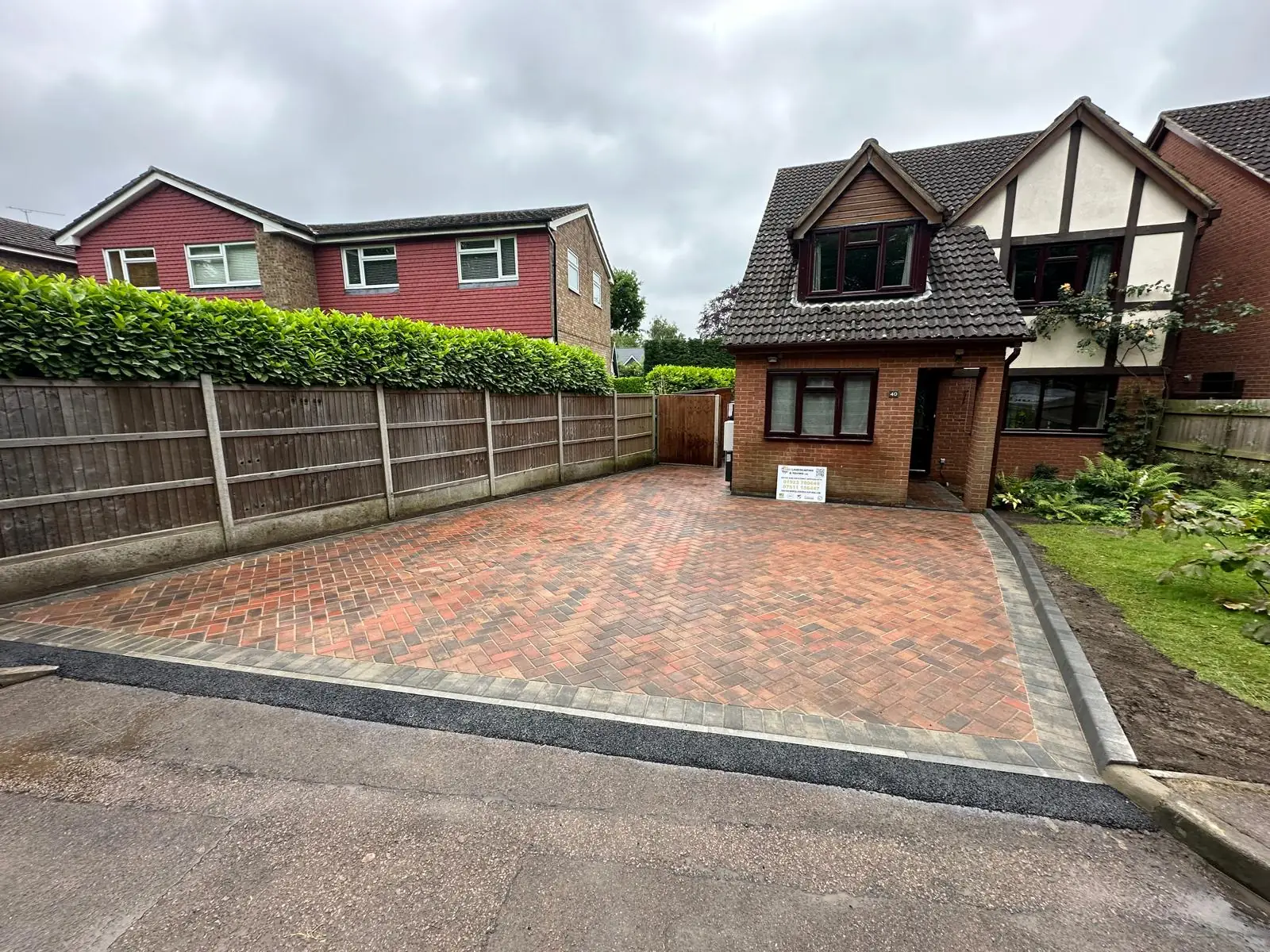
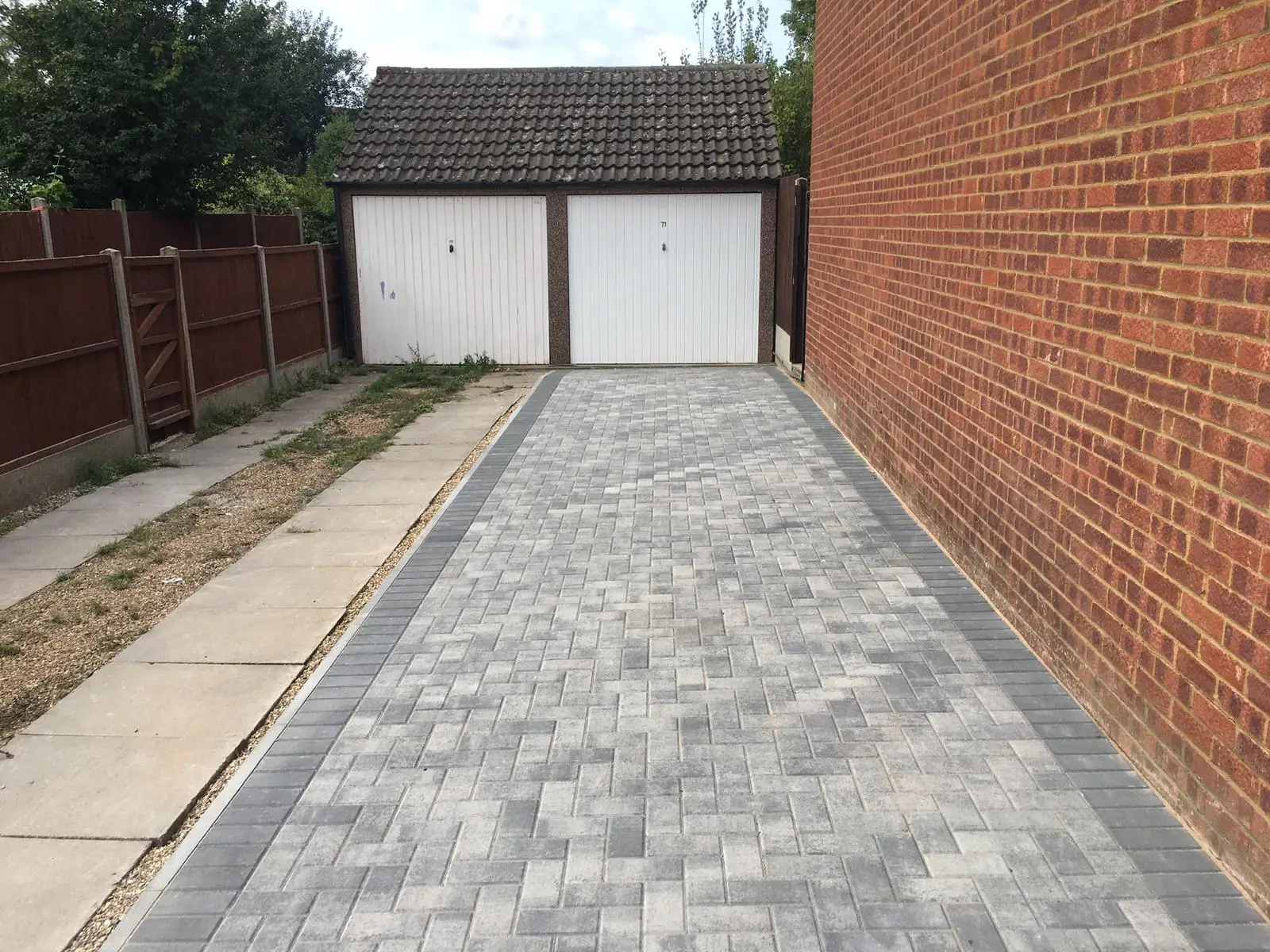
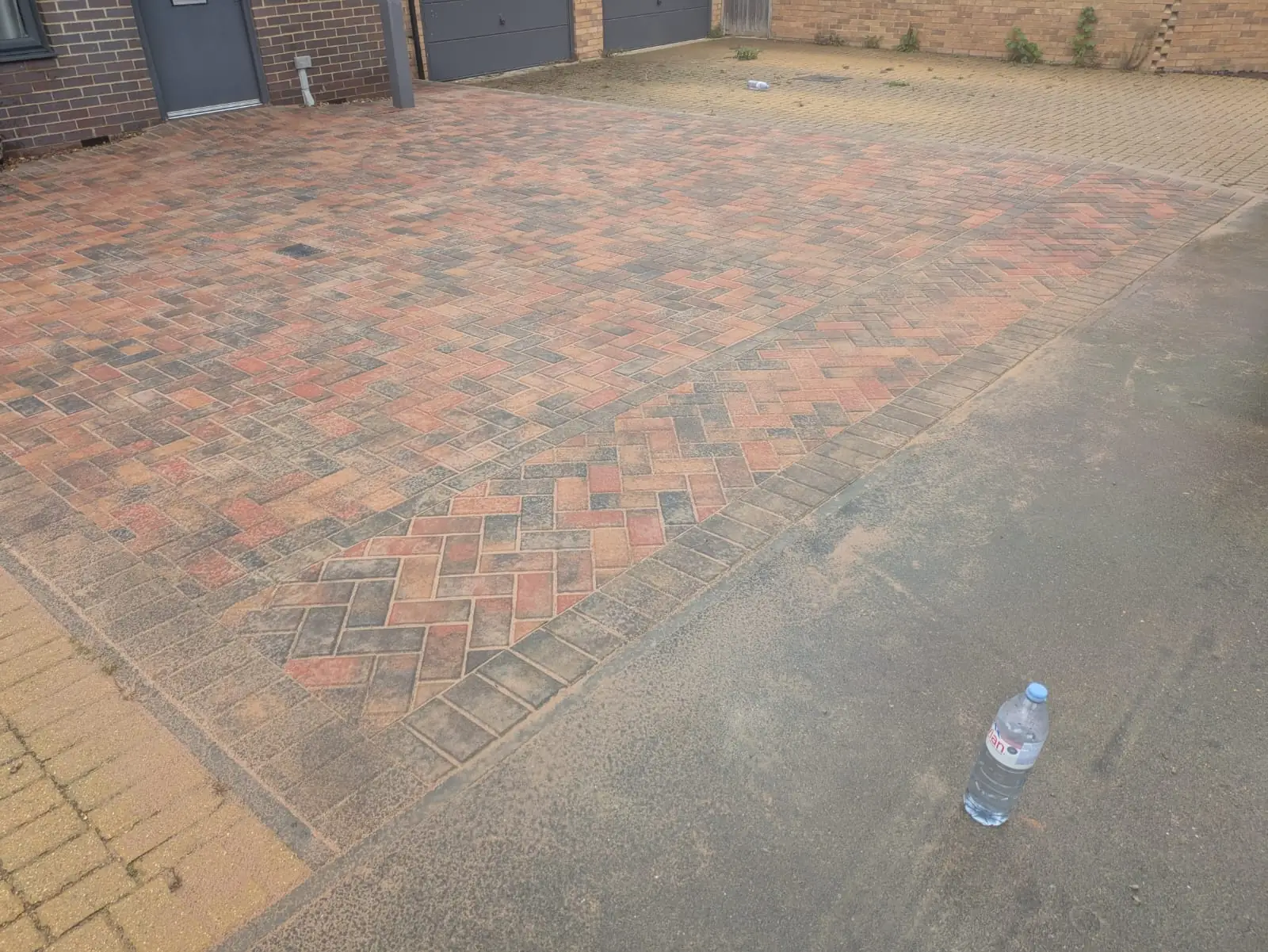
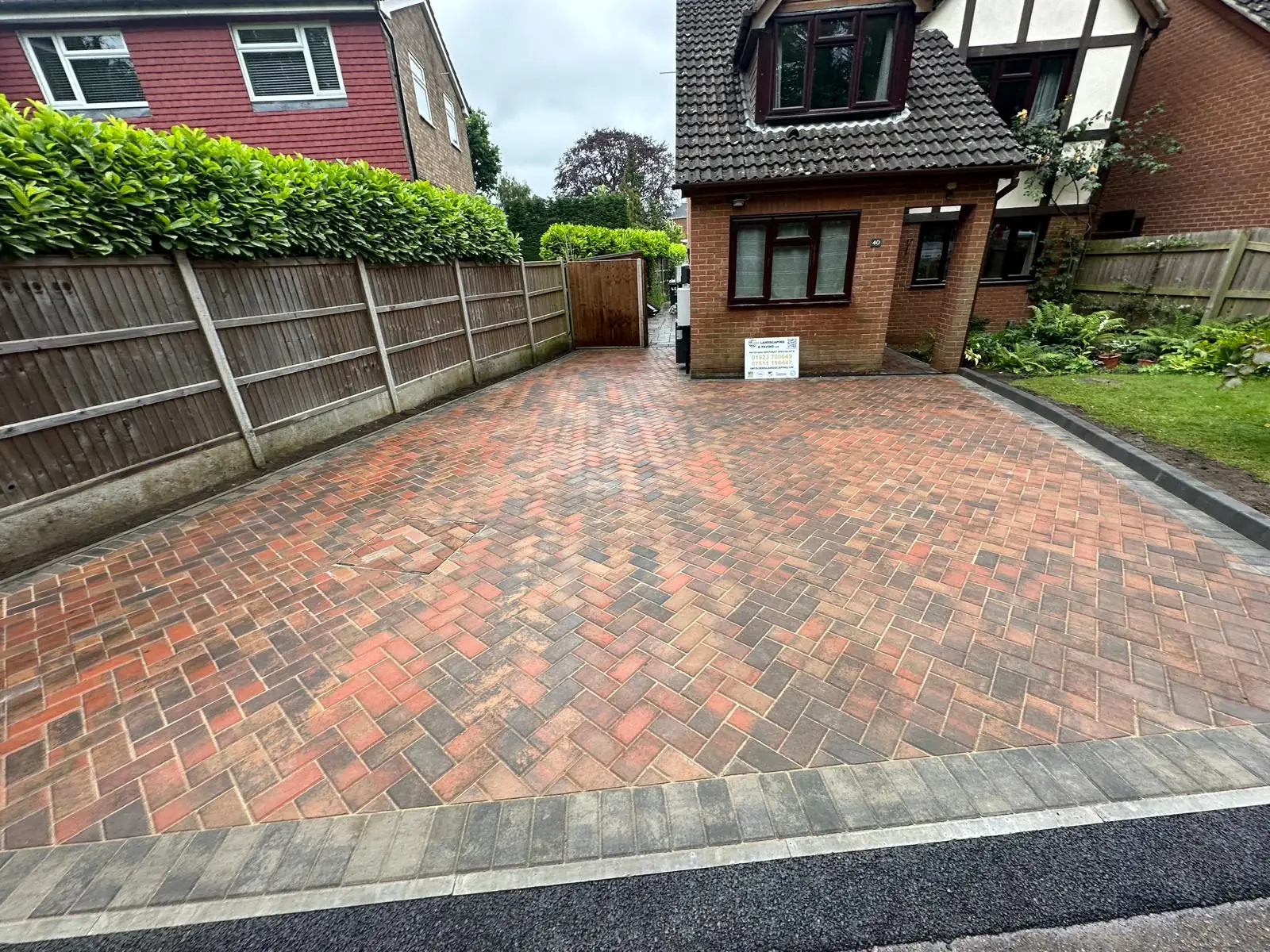
Block paving is the most repairable driveway surface there is. Because it is made of separate units bedded on sand rather than one continuous sheet, a block that gets oil on it, cracks or settles can be lifted out and swapped, and the repair vanishes. Nothing else on a driveway does that.
BMS (trading as BMS Building & Groundworks Ltd, formerly BMS Landscaping & Paving Ltd) is a Tobermore Registered Paving Contractor, and lays block paving across Watford, St Albans, Hemel Hempstead and Harrow, along with Borehamwood, Rickmansworth, Bushey and the wider area. BMS also states that it is a Brett Approved Paving Contractor.
The blocks themselves
Two families, and they behave differently.
Concrete blocks are the common choice. They are made in a huge range of colours, finishes and sizes, from plain rectangular blocks through to tumbled and textured ranges that imitate stone. Colour runs through the block on better ranges rather than sitting on the face, which matters after a decade of weather. New concrete blocks usually throw a white bloom for the first few months. That is efflorescence, it is normal, and it washes off.
Clay pavers are fired rather than cast. The colour is the fired clay itself, so it does not fade, and clay holds its appearance for a very long time. Clay is harder, more brittle to cut and generally a more expensive way to do it.
Permeable blocks are a different job rather than a different look. They are laid with wider joints filled with fine grit instead of sand, and they sit on an open graded stone build up that holds water and lets it soak away. That build up is the permeable part. Permeable blocks on a normal sealed sub-base are not a permeable driveway.
How the job is done
The visible part is the last day or so.
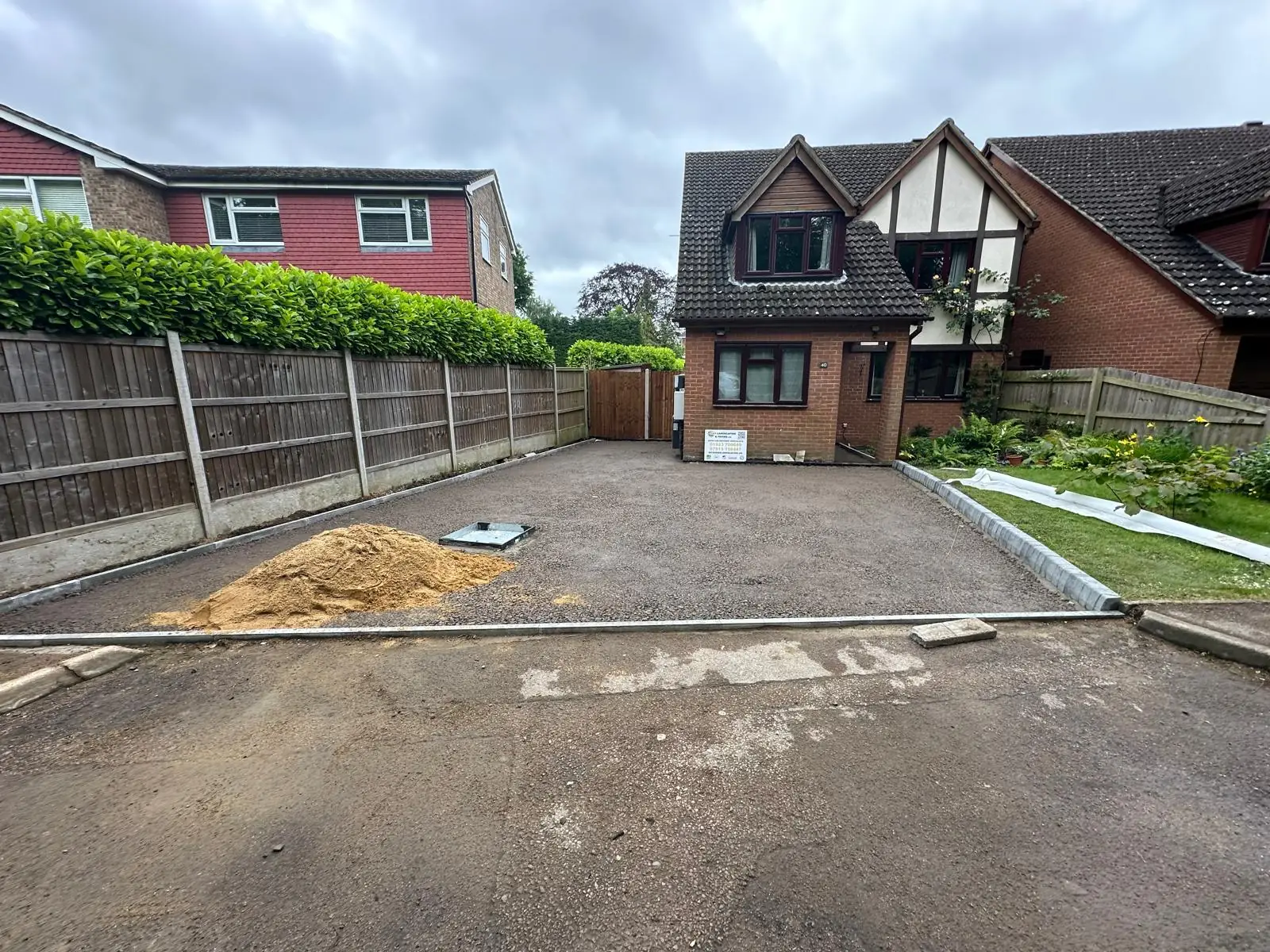
- Dig out. The old surface and enough ground below it come away. Depth is set by what the ground is actually like and what the drive carries, which is settled on site rather than guessed.
- Sub-base. Crushed stone laid and compacted in layers. Compacting in layers is the part that gets skipped and the part that decides whether wheel tracks appear.
- Edge restraint. Edging blocks or kerbs bedded and haunched in concrete along every free edge. Block paving is held together by being squeezed. Take the edge away and the blocks creep outwards, the joints open, and the pattern loses its lock.
- Laying course. A screeded layer of sharp sand, kept at an even thickness and not used to make up for a lumpy sub-base.
- Laying. Blocks are laid to the pattern, working off the finished levels and keeping the falls running the right way.
- Cutting. Edges, curves and obstacles cut in. Neat, full sized cuts rather than slivers, because a thin sliver has nothing holding it.
- Compaction and jointing. The paving is vibrated down onto the laying course, kiln dried sand is brushed into the joints and vibrated again until the joints are full.
Why the pattern matters
Herringbone, laid at forty five or ninety degrees, is the pattern used on driveways for a structural reason rather than a decorative one. Every block is interlocked with its neighbours in both directions, so braking and turning forces get spread across the whole surface instead of pushing one row along. Stretcher bond and basketweave look good on paths and patios but have continuous straight joints that can creep under vehicle loads. Patterns get mixed deliberately: herringbone on the trafficked area, a border in stretcher bond to frame it.
What decides the finish and the lifespan
- Sub-base depth and compaction. The whole thing. Nearly every failed block drive is a base failure wearing a paving surface.
- Edge restraint. Concrete haunching, not sand.
- Falls. Water needs somewhere to go and enough slope to get there. Flat paving holds puddles, and puddles grow moss.
- Full joints. Jointing sand is structural, not cosmetic. It is what transfers load from block to block. Joints that wash out want topping up.
- Cut quality. Full blocks wherever possible, and no thin slivers at the edges.
Looking after it
Very little. Brush it. Keep the joints topped up with kiln dried sand every few years, especially after heavy rain or a jet wash. If you do jet wash it, keep the lance moving and off the joints, because a narrow jet held in one place strips the sand straight out. Sealing is optional: it deepens the colour and makes spills easier to lift, and it needs redoing periodically.
What to ask a block paving contractor
- What depth are you digging, and how are you compacting the sub-base? In layers, or all at once?
- How is the edge restrained? The answer should involve concrete.
- Which manufacturer and range? Ask to see the actual block, outside, in daylight.
- What pattern on the trafficked area? Herringbone, and why.
- Permeable or drained? And how the front garden rule is being met.
- What goes in the joints? Kiln dried sand for standard paving, grit for permeable.
Working with BMS Building
Perry Niven quotes every block paving job himself and has over twenty years behind the work.
- Tobermore Registered Paving Contractor, held by BMS (trading as BMS Building & Groundworks Ltd, formerly BMS Landscaping & Paving Ltd)
- Brett Approved Paving Contractor (BMS's own statement)
- Vetted TrustATrader member since 7 March 2018, membership TT13412
- Environment Agency registered waste carrier, CBDU453042, held by BMS (trading as BMS Building & Groundworks Ltd, formerly BMS Landscaping & Paving Ltd), so the old surface leaves site legally
There is no price on this page because there is no honest one to give before seeing the drive. Cost follows the size, the block you choose, what has to come out and what the ground is like underneath. The quote comes after the site visit, it is agreed upfront, and it does not change halfway through the job.
Book a site visit
Block paving is one of the surfaces covered by our driveways work. Tell us what you have and Perry will come and look at it.
Common questions
Is block paving better than resin?
They fail differently, which is the useful way to compare them. Block paving is made of separate units, so a stained, cracked or sunken block can be lifted out and replaced and the repair disappears. Resin is a continuous surface with no joints, so it stays smoother and weeds cannot come up through it, but a damaged patch is harder to make invisible. Block paving copes well with turning and braking. Resin depends entirely on the base it sits on. Neither is the right answer for every drive.
Why does block paving sink in the wheel tracks?
Almost always because of what is underneath rather than the blocks. Either the sub-base was too shallow for the ground, or it was not compacted in layers, or the edges were not restrained in concrete so the whole surface crept outwards and the joints opened. Blocks themselves very rarely fail. This is why the dig out and the sub-base take most of the time on a block paving job and why the depth is set after seeing the ground.
What is the white powdery bloom on new block paving?
Efflorescence. It is lime coming out of the concrete as the blocks dry, and it appears on new concrete block paving from any manufacturer. It is not a fault, it is not a stain and it does not affect strength. It weathers off on its own over the first months as rain washes it through. It is not worth attacking with acid cleaners, which can do more harm to the surface than the bloom does.
Does block paving need permeable blocks?
Only if the drive is in a front garden, is more than five square metres, and the water has nowhere natural to run off to. In England, a front garden hard surface over that size needs planning permission unless it is permeable or drains to a lawn or border. Permeable block paving is laid with wider joints filled with grit and sits on an open graded build up so water drains straight through it. Check your own case with your local council.