
Fencing
BMS Building installs and replaces garden fencing across St Albans, Hemel Hempstead and Watford. Close board and picket are the two types fitted, it is a smaller and quicker job than a driveway or a full garden, and Perry Niven quotes every job himself after a site visit.
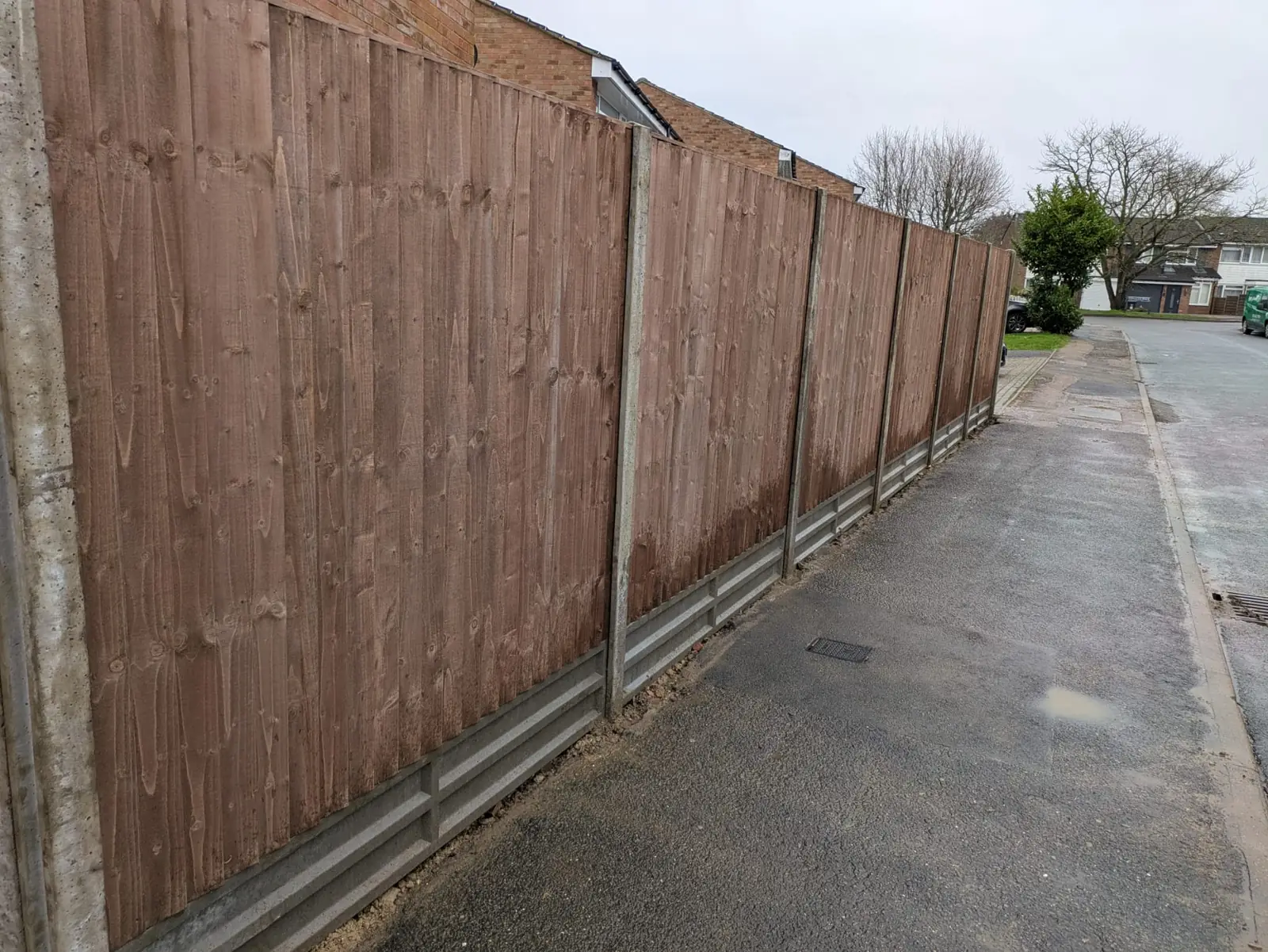
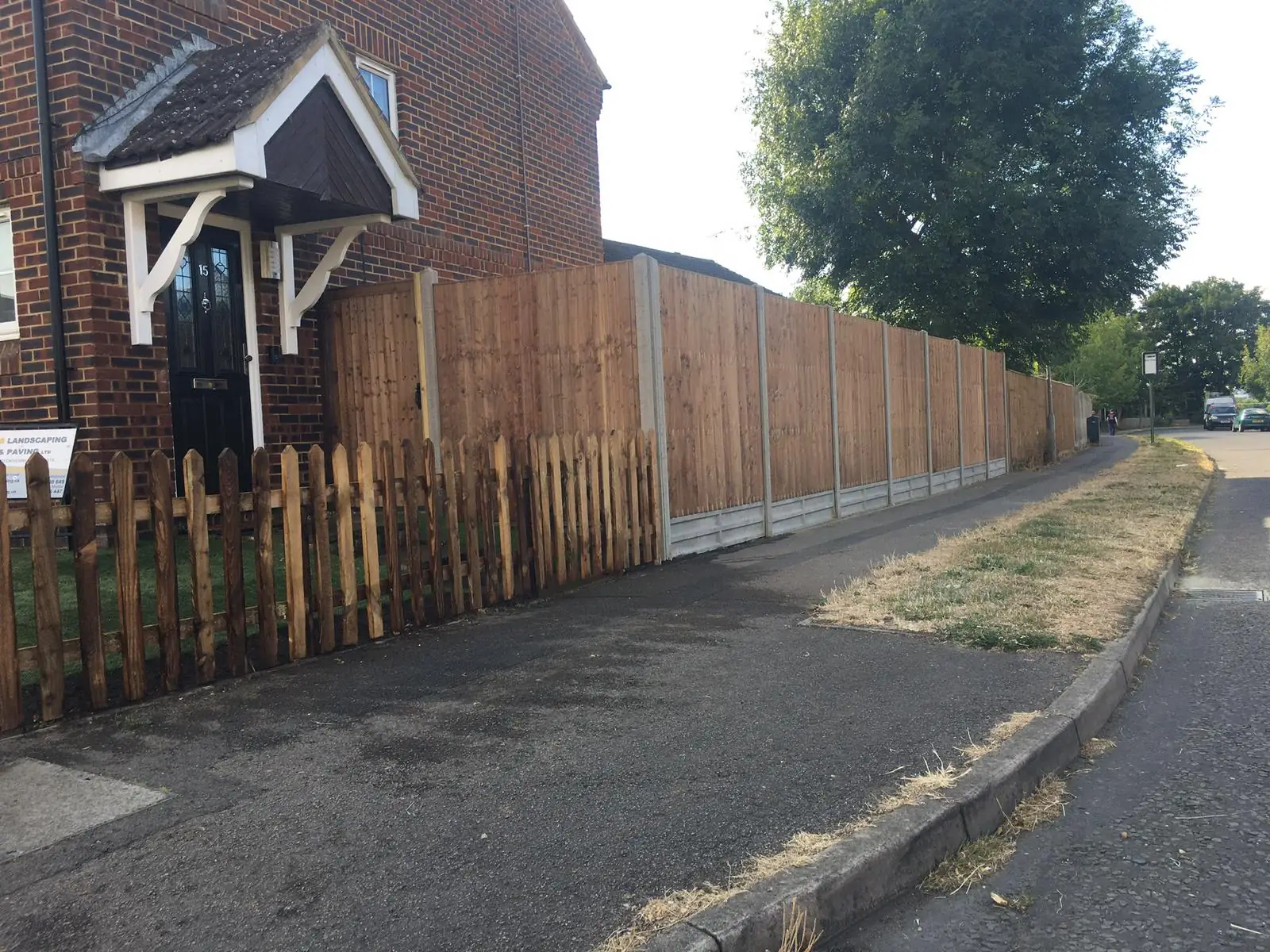
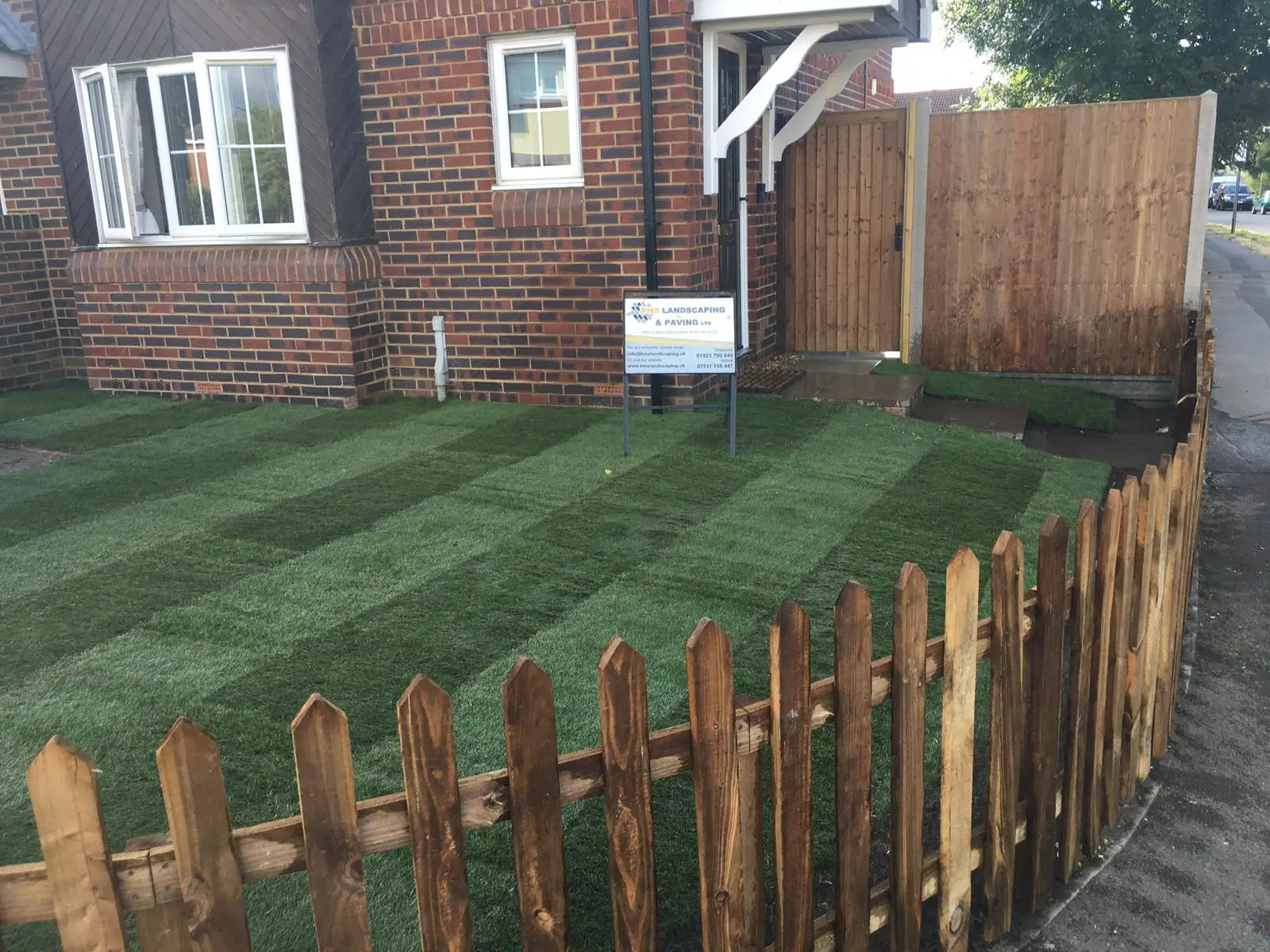
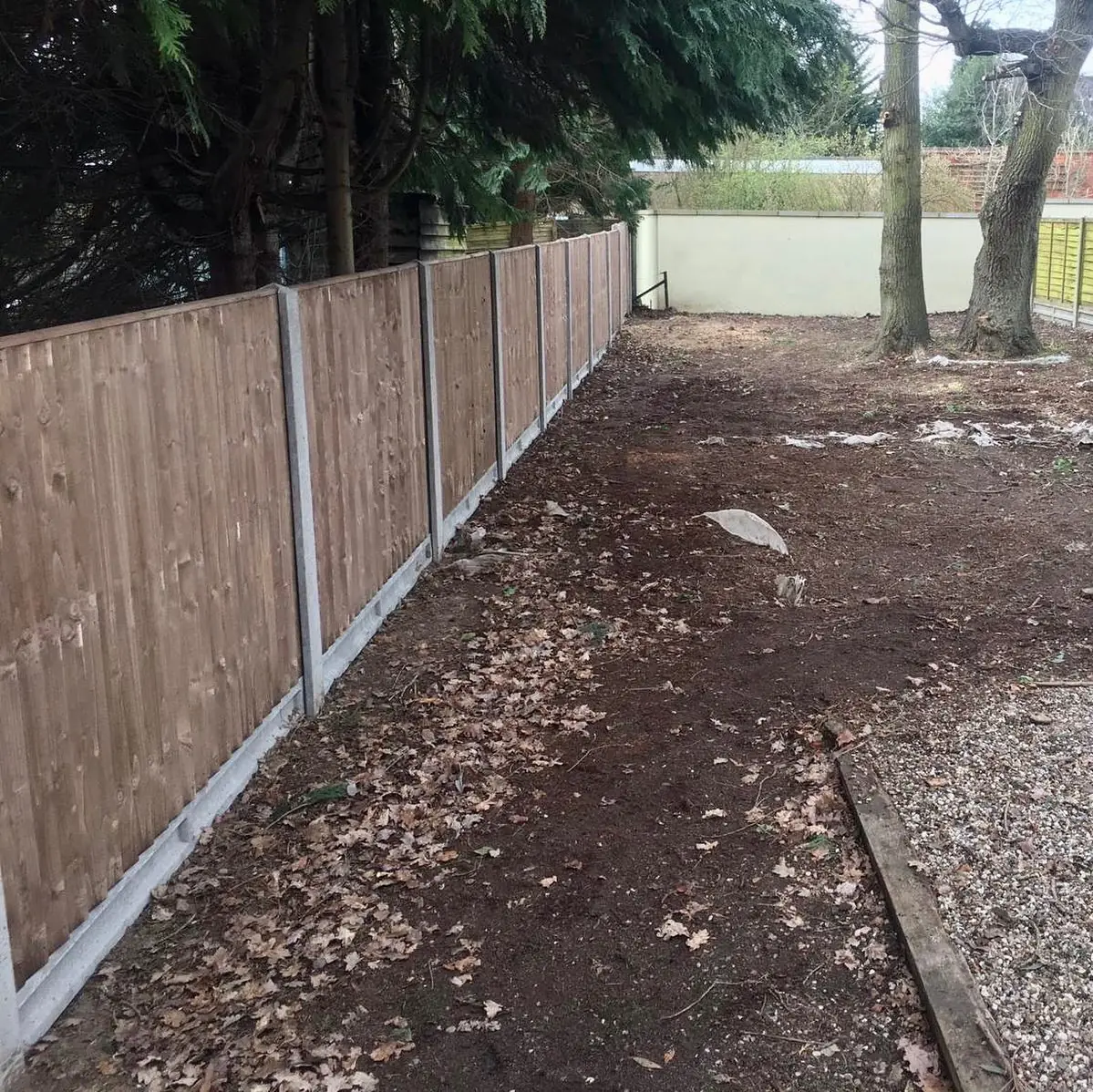
Fencing is a smaller job than most of what is on this site, and that is worth saying plainly rather than dressing it up. There is no sub-base to dig out, no levels to design around and nothing that has to cure before anyone can walk on it. A fence is posts, fixed properly, with something spanning between them.
What decides whether it lasts is almost entirely the posts and what holds them in the ground. Everything above that is the part you look at.
BMS Building fits fencing across St Albans, Hemel Hempstead and Watford, and works more widely across Hertfordshire and the northwest London border, including Harrow, Borehamwood, Rickmansworth and Bushey.
Height, and when you need permission
This is the rule worth knowing before anything is ordered, because it is the one that can stop a finished fence from being allowed to stay up.
Under permitted development in England, a new or replacement fence, wall or gate can be:
- up to 1 metre high where it is next to a highway used by vehicles, or next to the footpath of such a highway. In practice that is usually a front boundary.
- up to 2 metres high anywhere else, which is usually the sides and the back.
Above those heights, you need planning permission. BMS build fences up to 6ft 6in (2m), subject to regulation.
Those are the general limits and they are not the whole picture.
- An Article 4 direction, or a condition on the house's planning permission, can take the right away, and then a new fence, wall or gate needs permission whatever its height.
- At a listed building the limits do not apply at all within its grounds or on a boundary with one, and work that affects the building's character needs listed building consent as well.
- A conservation area does not lower the heights on its own. What it can catch is taking an existing fence, wall or gate down, which can need planning permission.
Covenants on the title can also restrict what is allowed, separately from planning.
Check your own address before anything is ordered or taken down. The Planning Portal and your local council's planning department are the two places that can answer it for your property. The cost of asking is a phone call. The cost of not asking is a fence.
Close board fencing
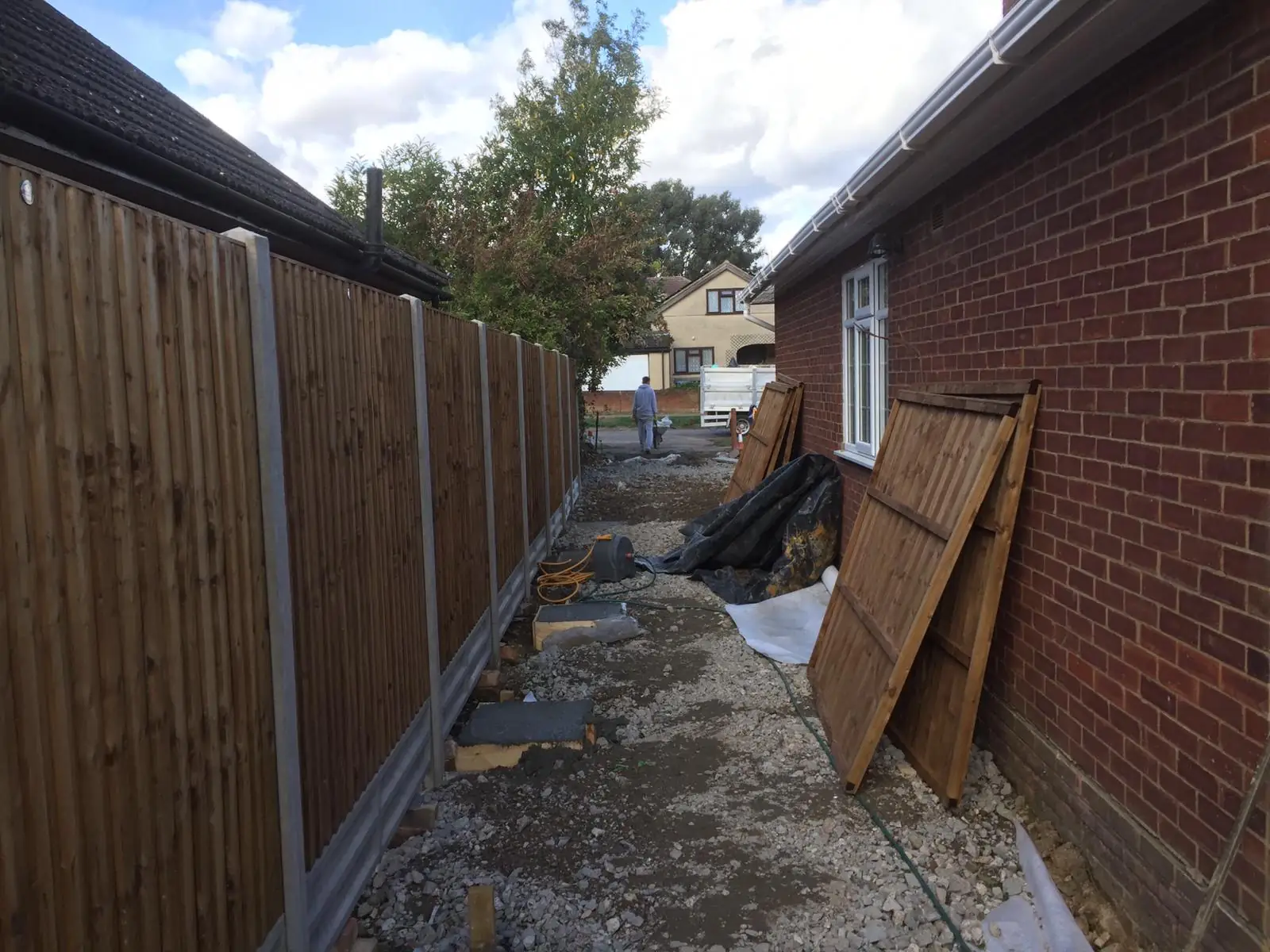
Most of the fencing BMS fit is close board panels on concrete posts or slotted concrete posts, with concrete gravel boards along the bottom. It is the heavier and more solid of the two, and it is what most people picture when they think of a private garden boundary.
BMS fit gates as well.
The timber treatment on the panels is covered by the manufacturer's guarantee. BMS do not give a timber treatment guarantee of their own.
Picket fencing
Picket is open by design. Vertical palings are fixed to rails with a gap between each one, so it marks a boundary and keeps a dog or a small child in without closing the view off.
It takes far less wind than a close board fence does, which is why it can be lighter throughout. It is most often used on a front boundary, which is exactly where the 1 metre limit above tends to apply, so the height rule and the fence type usually come up in the same conversation.
Posts are the job
Whatever goes between them, a fence stands or falls on its posts.
- Depth. A post needs enough of itself in the ground to resist being levered over by the wind acting on everything above it. The taller the fence, the deeper the post.
- What holds it. The post is set so that it cannot move and so that water is not trapped around it. Standing water at the base of a post is what rots timber and it is the most common way a fence reaches the end of its life while the panels are still sound.
- Spacing. Rails and boards are sized for a span. Stretching the spacing to save a post is what produces a fence that bows.
- Line and plumb. Set off a string line, with each post plumb. A fence line that wanders is visible from the other end of the garden forever.
- Ground contact. Timber sitting directly on soil stays wet. Keeping the bottom of the boards clear of the ground is what keeps them dry.
Taking the old one out
Most fencing work is replacement rather than a new boundary, and the removal is often the part that decides how long the job takes. Old concrete around a post line has to come out before new posts can go in the same positions, and what is down there is not known until it is dug.
BMS (trading as BMS Building & Groundworks Ltd, formerly BMS Landscaping & Paving Ltd) holds an Environment Agency waste carrier licence, number CBDU453042. The old panels, posts and concrete spoil are carried away and disposed of legally. Treated timber is not ordinary garden waste, it should not be burned, and it is not something to leave for a general collection.
The legal duty of care on waste, and how to check a carrier's registration yourself, is set out on the groundworks page.
Before the first post goes in
Two things are worth settling before anyone starts, and neither is expensive to check:
Whose boundary is it. The deeds and the title plan decide this. The idea that you own the fence on one particular side of your garden is a habit rather than a law, and it is wrong often enough to matter. A fence taken down on someone else's boundary is a dispute, not a job. The fence line BMS set out follows the Land Registry boundary and the property lines.
What is allowed. The height rule above, plus anything specific to your property.
What to ask a fencing contractor
- How deep are the posts going? And does that change with the height.
- How are the posts fixed, and how does water get away from them?
- What is the post spacing?
- Is the height within permitted development for that boundary? A contractor who has never heard of the 1 metre limit has not done a front boundary.
- Who takes the old fence away, and what is your waste carrier licence number?
- What happens if there is old concrete in the post holes?
Working with BMS Building
Perry Niven founded BMS Building and quotes every job himself. Over twenty years of driveways, patios, groundworks and gardens sit behind the work.
- Vetted TrustATrader member since 7 March 2018, membership TT13412, with no missed appointments in the last six months
- Environment Agency registered waste carrier, CBDU453042, held by BMS (trading as BMS Building & Groundworks Ltd, formerly BMS Landscaping & Paving Ltd)
Fencing is frequently done at the same time as landscaping, because a boundary goes in after the levels and the hard landscaping are settled and before turf is laid.
Pricing is open and upfront. There are no prices on this page, because what a fence costs depends on its length, its height, the type, the ground, and what has to come out first. Every quote follows a site visit. The price agreed at the start is the price at the end, and it does not change part way through the job.
Book a site visit
Tell us roughly how long the boundary is, what is there now, and whether it is a front or a back, and Perry will come and look at it.
Common questions
How high can I build a fence without planning permission?
Under permitted development in England, a new or replacement fence, wall or gate can be up to 1 metre high where it is next to a highway used by vehicles, or next to the footpath of one, and up to 2 metres high anywhere else. Above those heights you need planning permission. Being in a conservation area does not lower those limits on its own. An Article 4 direction or a condition on the house's planning permission can take the right away, the limits do not apply at all within the grounds of a listed building or on a boundary with one, and in a conservation area taking an existing fence, wall or gate down can need permission. The Planning Portal and your local council are the two places to check your own address before anything is ordered.
Do I own the fence, or does my neighbour?
The deeds decide it, not a rule of thumb. There is a widely repeated idea that you own the fence on a particular side of your garden, and it is not law: it is a habit that happens to be true often enough to keep being repeated. Your title plan and any covenants are what actually say whose boundary it is and who maintains it. It is worth knowing before work starts, because taking down a fence that is not yours is a dispute rather than a job.
Is fencing quicker than other garden work?
Usually, yes, and it is worth saying plainly. A fence has no sub-base to dig out, no levels to design around and no surface to cure, so it is a smaller and more contained job than a driveway, a patio or a full garden rebuild. The parts that take the time are getting the posts in correctly and dealing with what is already there. Ground conditions, tree roots, concrete from an old fence line and the removal of the existing panels are what change the picture, which is why the timescale comes with the quote after the site has been seen.
What happens to the old fence?
It leaves site legally. BMS (trading as BMS Building & Groundworks Ltd, formerly BMS Landscaping & Paving Ltd) holds an Environment Agency waste carrier licence, number CBDU453042, which covers the old panels, posts, concrete spoil from the post holes and anything else that comes out. Treated timber is not ordinary garden waste and should not be burned or left for a general collection, so it is worth asking any contractor what they do with it and what their licence number is.