
Patios
BMS Building builds patios across Watford, St Albans, Hemel Hempstead and Harrow, in porcelain, Indian sandstone, natural stone and granite. Which material suits a garden depends on its aspect, its use and the house it sits against, and Perry Niven quotes every job himself after a site visit.
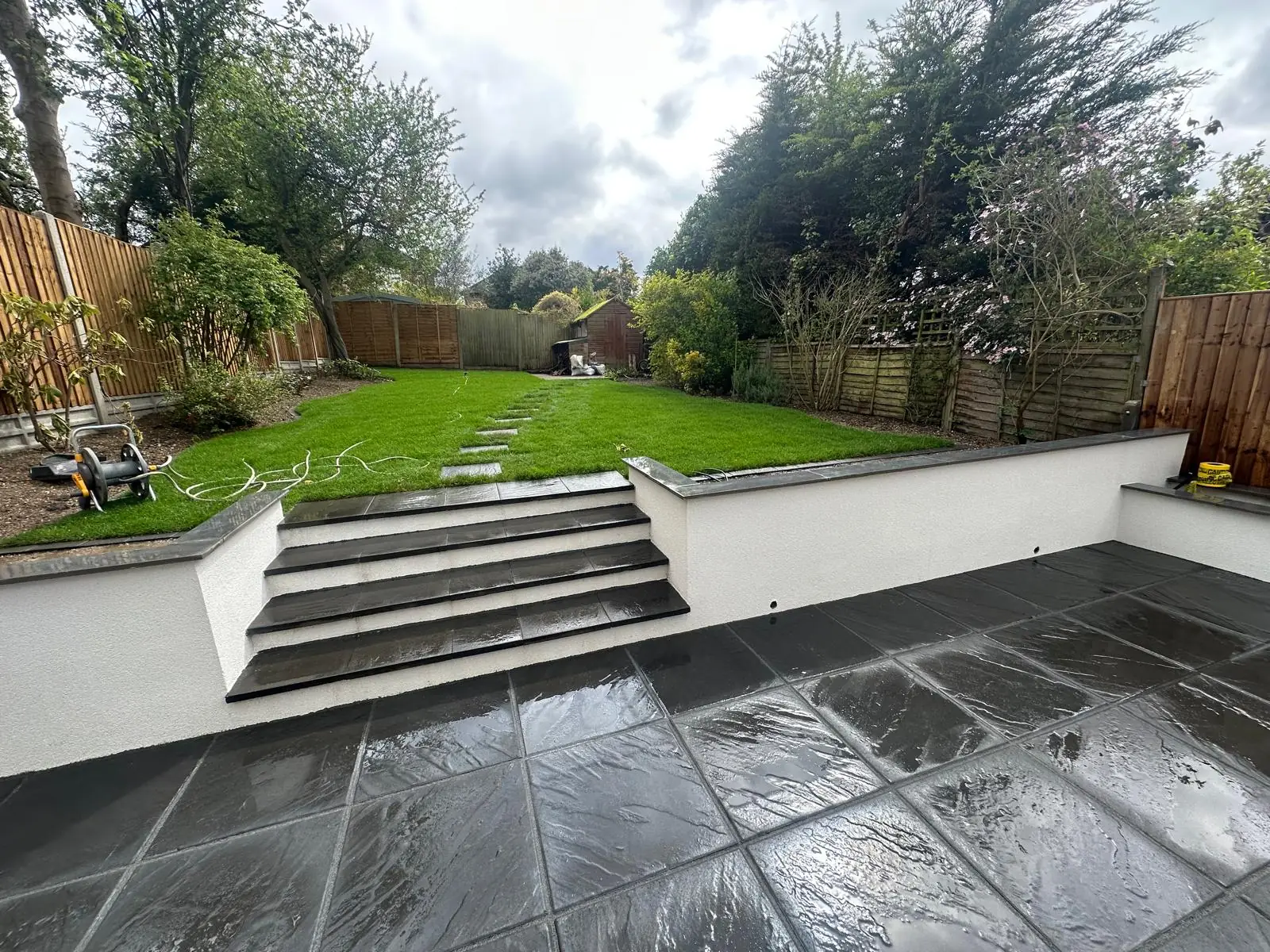
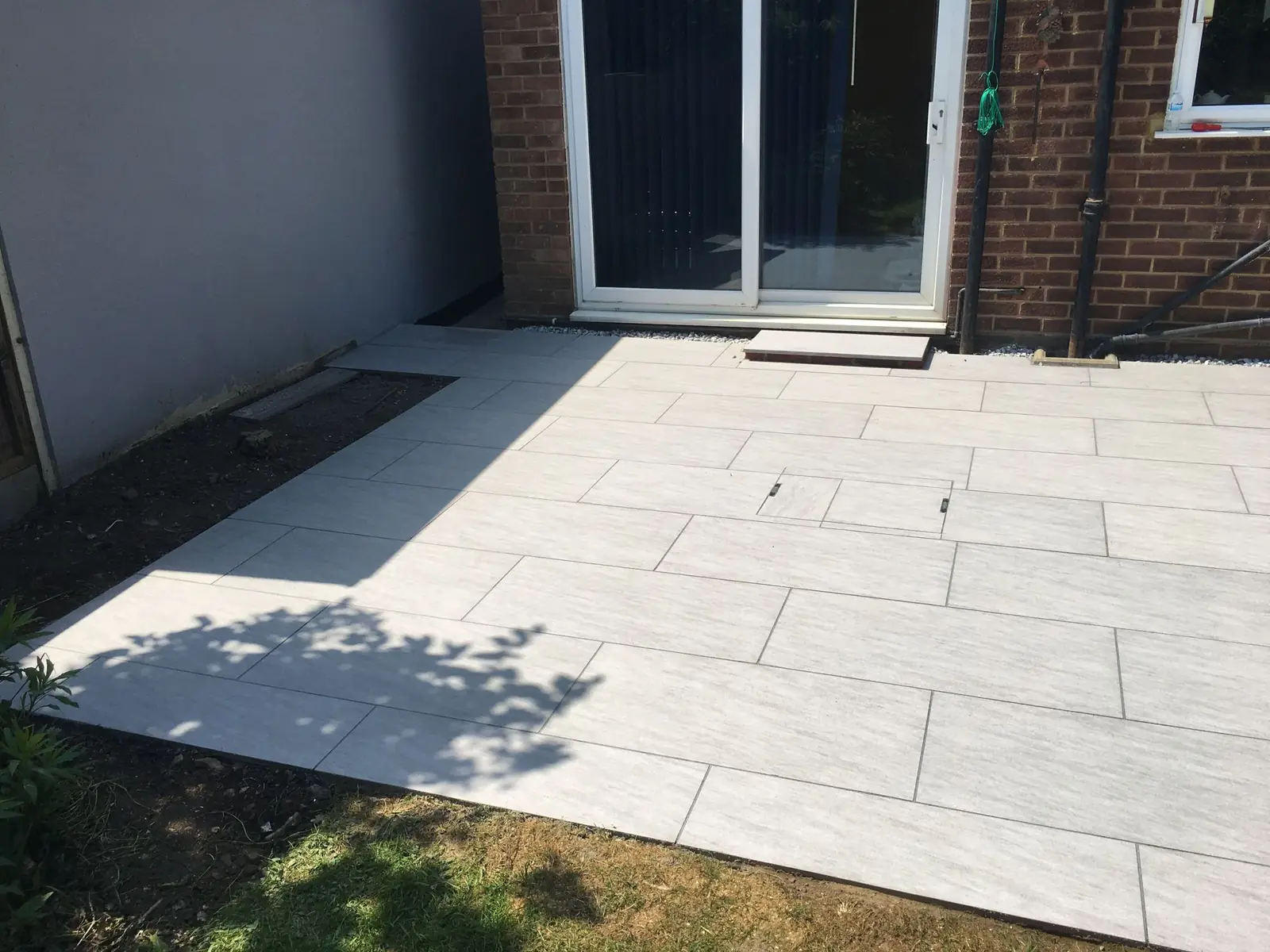
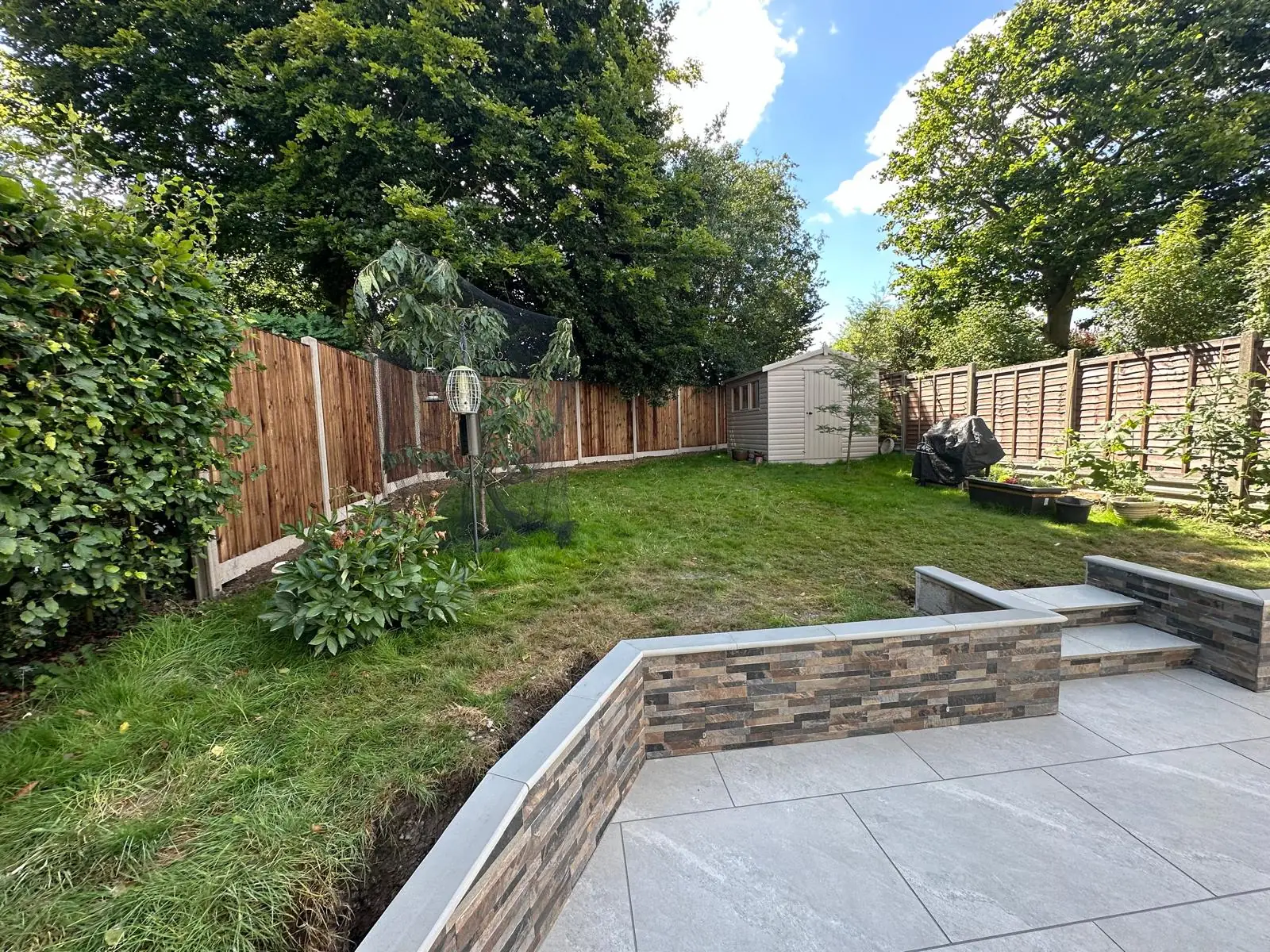
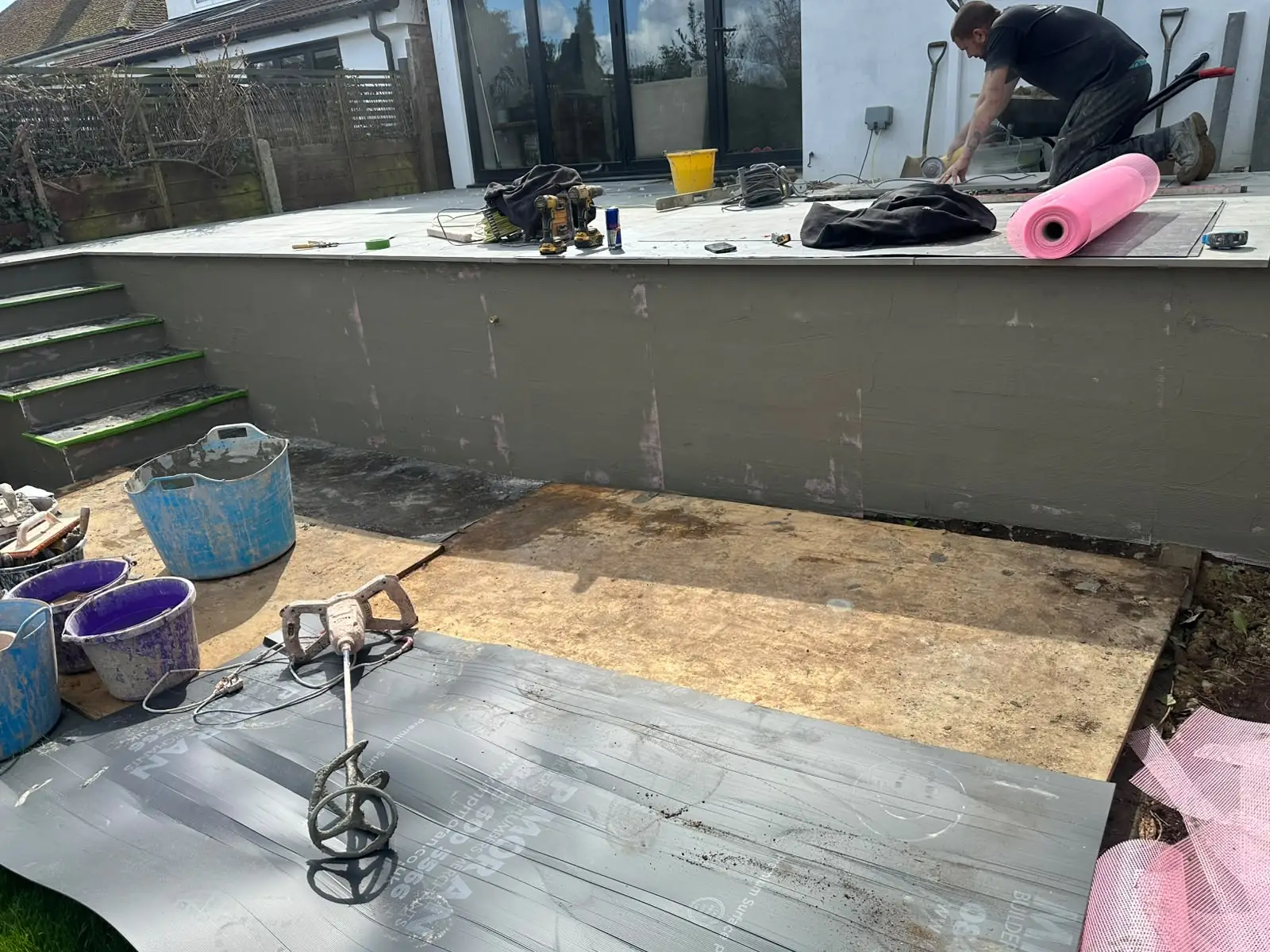
A patio is the one piece of hard landscaping people actually sit on, and the material decision is the part of it that gets made from a photograph and regretted in February.
BMS (trading as BMS Building & Groundworks Ltd, formerly BMS Landscaping & Paving Ltd) is a Tobermore Registered Paving Contractor, and builds patios across Watford, St Albans, Hemel Hempstead and Harrow, along with Borehamwood, Rickmansworth, Bushey and the wider area. BMS also states that it is a Brett Approved Paving Contractor.
This page is about choosing: what each material is actually like to live with, and what suits which garden. How a patio is built, the full mortar bed, the falls and the clearance to the damp proof course, is on the paving page, and it matters more than the material does.
What actually decides the material
Three things, ahead of what it looks like in a photograph.
How much sun the space gets. A shaded, north-facing patio stays damp, and damp grows algae. Porous materials hold that moisture and go green faster than dense ones do. The same slab in a sunny garden and in a shaded one is two different maintenance jobs.
How you are going to use it. A dining and family space takes chairs dragged across it, barbecue fat, spilt wine and suncream. A quiet corner with two seats takes almost nothing. The first one wants a surface that does not absorb what lands on it.
What the house is made of. The patio sits against it and the two are looked at together. A warm brick house and a cool grey slab can work, but it is a decision worth making deliberately rather than discovering.
Then the practical ones: how much upkeep you actually want to do, and whether the surface needs grip for a slope or a route to a door.
Porcelain
Porcelain is fired to a very low porosity. It barely takes up water, and almost everything good about it follows from that single property.
What it is like to live with. Stains sit on the surface rather than soaking in, so spills lift. It resists frost damage, because there is very little water in the body of the slab to freeze and expand. The colour does not weather or fade. It does not need sealing, ever.
What that costs you elsewhere. The same density makes it harder to work with. It needs proper cutting equipment, and it needs a bonding slurry primer on the back of every slab to grip the mortar, because a surface that does not absorb water does not absorb moisture from a mortar bed either. Skip the primer and the slab is sitting on the bed rather than bonded to it, and it will lift. That is a laying detail rather than a material fault, and it is on the paving page.
Trade-offs. It is made to tight tolerances, so thicknesses are consistent and joints come out very even, which some people love and some find a little too perfect. Slip resistance varies by finish and is worth asking about for a route in and out of the house or anywhere on a slope. It is generally the more expensive of the materials here to buy.
Suits: shaded gardens, family spaces that take real use, anyone whose honest answer about maintenance is "none".
Natural stone
Natural stone is a category, not a material. Sandstone, limestone, granite and slate are all quarried rather than manufactured, and the two sections below, Indian sandstone and granite, are both natural stones. This is what they have in common.
It varies, and that is the point. Colour, marking and figure change from slab to slab and often from batch to batch, because it came out of the ground that way. That variation is why people choose it. It is also why a repair or an extension years later rarely matches, and why laying it well takes longer: slabs get sorted and laid out before they are bedded so the variation is spread across the patio rather than pooling in one corner.
Calibration. Stone can be sold calibrated, machined to a consistent thickness, or uncalibrated, where thickness varies across the pack. Both get laid; uncalibrated takes longer because the bed is worked to suit each slab. It is worth knowing which you are being quoted for.
Sealing is an option, not a requirement. Porous stone can be sealed to slow staining and make spills easier to lift. It needs redoing periodically and some sealants change the look. Plenty of natural stone is never sealed and weathers into something better.
Indian sandstone
The most common natural stone patio material in this country, and the one most people picture when they say a stone patio.
What it is like to live with. Warm in tone, usually riven rather than smooth, so it has texture underfoot and reasonable grip. It is forgiving of an imperfect edge or an odd shape because the material is already irregular. It weathers: the colour softens and the surface patinates, and most people consider that an improvement rather than wear.
What to know. It is porous, so it takes up water, which means it holds moisture in shade and will grow algae there. Spills can mark if they are left. Colour varies between slabs and between batches, so a patio laid from two deliveries can be noticeably two patios. Some sandstones carry iron deposits that can weep a rust colour after laying, which is a property of the stone rather than a fault in the work.
Trade-offs. It is the forgiving, warm, natural-looking option and it asks a little of you in return: keep leaves off it, expect it to change, and accept variation as the character you bought.
Suits: gardens with reasonable light, traditional and period houses, anyone who wants a patio that looks like it has been there a while.
Granite
The densest and hardest wearing of the natural stones used for patios.
What it is like to live with. Granite is extremely hard. It resists scratching, chipping and wear in a way softer stone does not, and its low porosity for a natural stone means it stains less readily and copes well with frost. The colour is stable. A flamed finish gives it grip, which makes it a sensible choice for a slope or a wet route.
What to know. The same hardness makes it slower and more demanding to cut, so a layout with a lot of cuts in it costs more work. It reads cool and modern rather than warm, which is either what you want or not.
Trade-offs. It is the long-life answer among the natural stones, and it is generally the most expensive of them.
Suits: high-use spaces, slopes and wet routes, contemporary houses, anyone who wants natural stone without the upkeep of sandstone.
Cleaning, by material
Sealing is covered under each material above. Cleaning differs too, and it is the thing people get wrong with a pressure washer in their hands.
Porcelain and granite are dense enough to take a jet wash without harm, using a wide fan kept moving. Sandstone and limestone are softer: a close, narrow jet scours the face of the stone and leaves it looking worn in stripes. Keep the pressure down and the lance well back.
Whatever the slab, the jointing is the vulnerable part, and that is on the paving page.
Victorian and mosaic tiled paths
Period tiled paths and mosaic work are a different craft from laying patio slabs, with their own materials, their own patterns and their own central question, which is whether an original path can be restored or has to be rebuilt. BMS Building both lays and restores them, and that is covered on the Victorian and mosaic tiled paths page.
How a patio actually gets built
The material is the visible half of the decision and the smaller half of the job. A full mortar bed under every slab, falls set before anything is laid, the right jointing for the material, and the finished level kept well below the damp proof course where the patio meets the house: those are what decide whether the patio is sound in ten years, whatever it is made of.
All of it, including the questions that catch a bad job out, is on the paving page. Where a patio is part of a wider garden build, the levels and the order of work are on the landscaping page.
Why the choice happens on site
Every one of the three things at the top of this page is something you can only judge standing in the garden: the aspect, the way the space meets the house, and how it is actually going to be used. That is why Perry Niven comes out himself and why the materials get talked through against your garden rather than out of a brochure.
What to ask about the material
Laying questions are on the paving page. These are the ones about what you are buying:
- Which stone, exactly? "Natural stone" is a category. Sandstone and granite behave very differently.
- Calibrated or uncalibrated?
- Is it coming from one batch? Variation between deliveries is visible on a finished patio.
- What is the slip resistance like on the finish I have chosen? Especially for a slope or a doorway.
- Does it need sealing, and what changes if I do or do not?
- How will it look in three years? Weathering is a feature of some of these materials and not others.
Waste
BMS (trading as BMS Building & Groundworks Ltd, formerly BMS Landscaping & Paving Ltd) is an Environment Agency registered waste carrier, licence number CBDU453042, so the old patio and the spoil leave site legally. The duty of care on waste, and how to check a carrier's registration yourself, is set out on the groundworks page.
Working with BMS Building
Perry Niven founded BMS Building and quotes every job himself. Over twenty years of driveways, patios, groundworks and gardens sit behind the work.
- Tobermore Registered Paving Contractor, held by BMS (trading as BMS Building & Groundworks Ltd, formerly BMS Landscaping & Paving Ltd)
- Brett Approved Paving Contractor (BMS's own statement)
- Vetted TrustATrader member since 7 March 2018, membership TT13412, with no missed appointments in the last six months
- Environment Agency registered waste carrier, CBDU453042, held by BMS (trading as BMS Building & Groundworks Ltd, formerly BMS Landscaping & Paving Ltd)
- A 6 year installation guarantee as standard, plus the manufacturer's guarantee on materials
Pricing is open and upfront. There are no prices on this page because a patio's cost depends on the area, the material, the amount of cutting the layout needs, the levels and what has to come out first. Every quote follows a site visit. The price agreed at the start is the price at the end.
Book a site visit
Tell us roughly how big the space is, which way it faces, what is there now and how you want to use it. Perry will come and look at it.
Common questions
Which patio material should I choose?
It depends on three things more than on taste. How much sun the space gets, because a shaded patio grows algae on a porous material far faster than on a dense one. How you will use it, because a family space taking chairs, barbecues and spilt drinks asks more of a surface than a corner seat does. And what the house is made of, because a patio sits against it and the two are seen together. Porcelain is the low maintenance answer, Indian sandstone the warm and forgiving one, granite the hardest wearing. None of them is the right answer everywhere, which is what the site visit is for.
Is Indian sandstone the same as natural stone?
Indian sandstone is one kind of natural stone. Natural stone is the category: sandstone, limestone, granite and slate are all quarried rather than manufactured, so all of them vary between slabs and between batches. Indian sandstone is simply the most common natural stone used for patios in this country, and granite is the densest and hardest wearing of the group. When somebody says a natural stone patio they usually mean sandstone, but it is worth asking which stone, because they behave very differently.
Does a patio need sealing?
Porcelain does not, because it barely takes up water at all. Porous natural stone such as sandstone or limestone can be sealed, and that is a choice rather than a requirement: sealing makes spills easier to lift and slows staining, it needs redoing periodically, and some sealants change how the stone looks. Plenty of sandstone patios are never sealed and weather into something people prefer. What matters more than sealing is keeping rotting leaves off the surface, which is what most staining turns out to be.
What happens at the site visit?
Perry Niven comes out himself. He looks at the levels, where the water is going to go, how the space relates to the house and the door thresholds, how much sun it gets and how you want to use it. Then the materials get talked through against that, rather than from a brochure. You get a price for the specification agreed. It is open and upfront, and it does not change part way through the job.