
Paving
BMS Building lays paths, steps and edging across Watford, St Albans, Hemel Hempstead and Harrow. Every slab goes on a full mortar bed with the falls set before laying and proper clearance to the damp proof course, and Perry Niven quotes every job himself after a site visit.
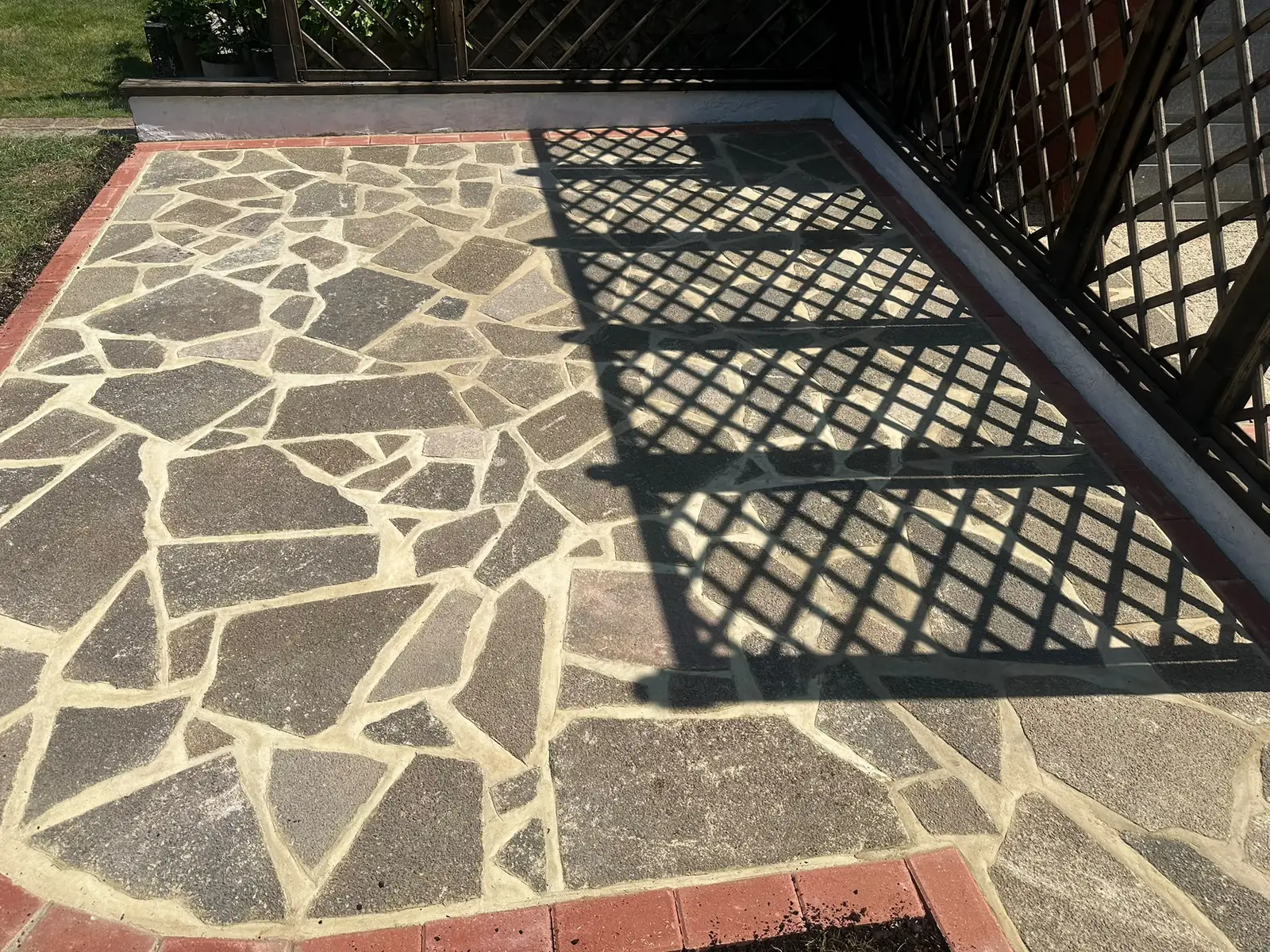
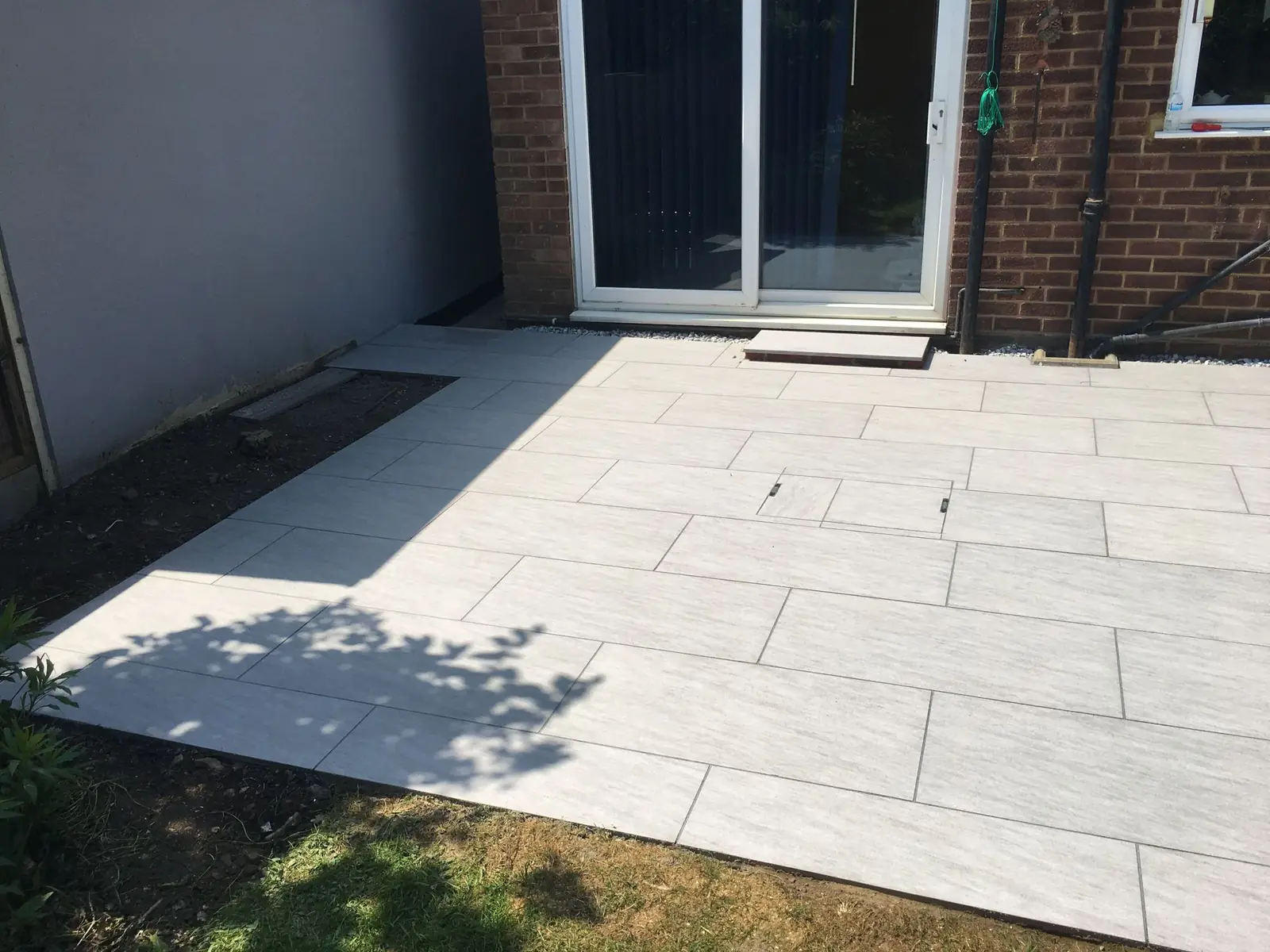
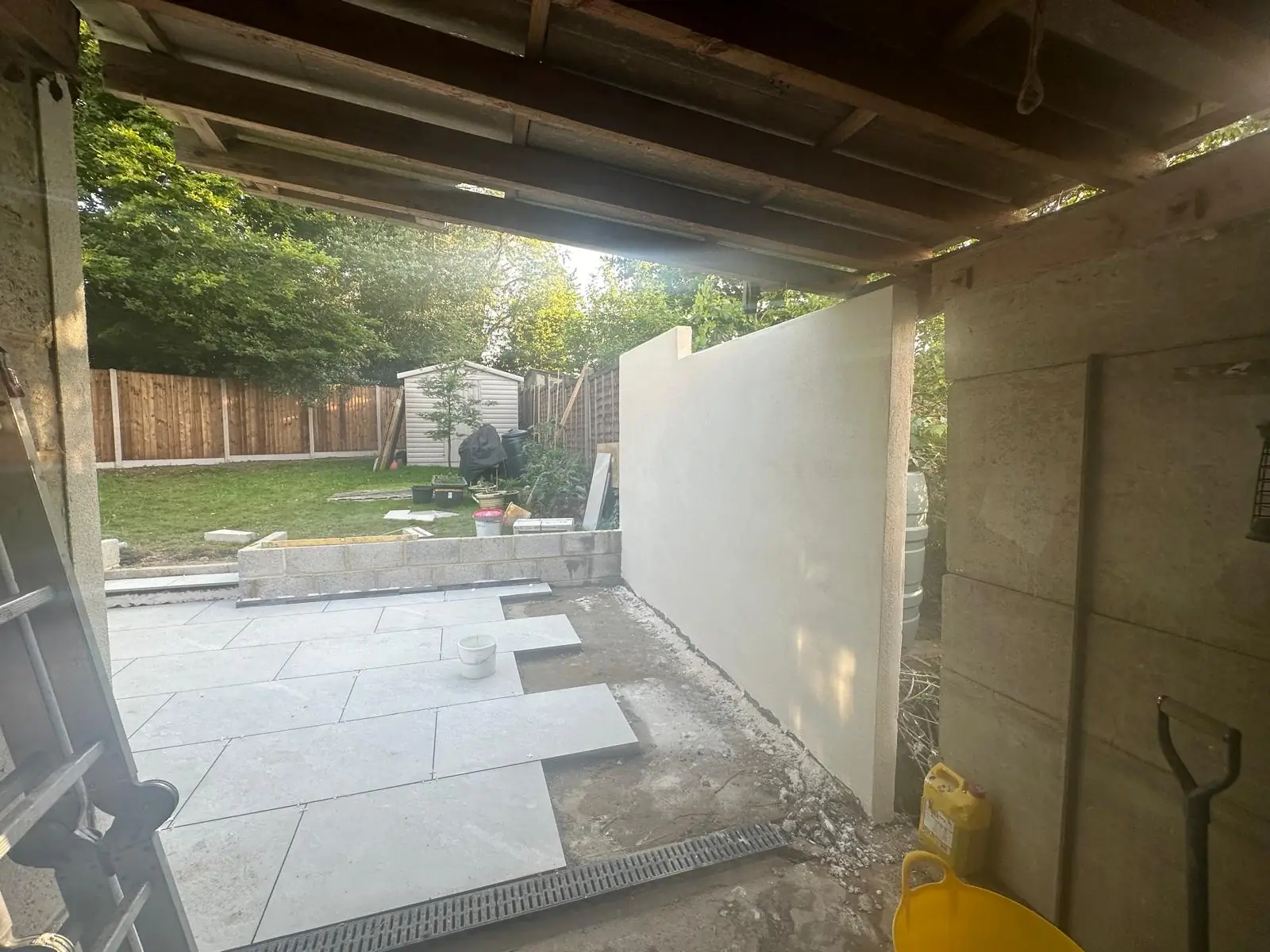
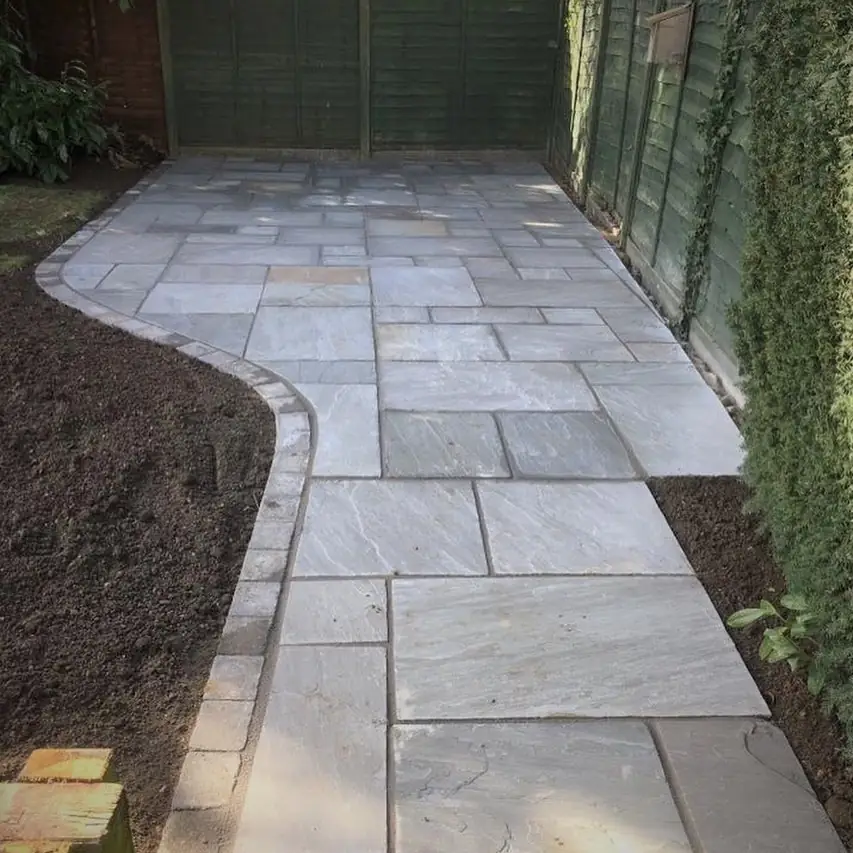
Paving covers the work that is not a driveway: paths, steps, edging and the levels that tie a garden together, along with the patios that sit among them. It carries people rather than cars, which changes the construction, and it is usually right against the house, which brings in a set of rules a driveway never has to think about.
This page is about how it is laid. Choosing between porcelain, Indian sandstone, natural stone and granite is a different question and it is on the patios page.
BMS (trading as BMS Building & Groundworks Ltd, formerly BMS Landscaping & Paving Ltd) is a Tobermore Registered Paving Contractor, and lays paving across Watford, St Albans, Hemel Hempstead and Harrow, along with Borehamwood, Rickmansworth, Bushey and the wider area. BMS also states that it is a Brett Approved Paving Contractor.
Materials
Porcelain, natural stone including Indian sandstone and granite, and concrete flags all get laid, and each behaves differently enough that choosing between them is its own decision. What each material is like to live with, and what suits which garden, is on the patios page.
What follows here applies whichever one you pick.
How the job is done
- Dig out to the depth the build up needs, allowing for the finished level being where it has to be rather than where it is convenient.
- Sub-base, crushed stone compacted in layers, as under a driveway but usually shallower because the loads are lower.
- Set the levels and the falls before anything is bedded, working off the house, the thresholds and wherever the water is going.
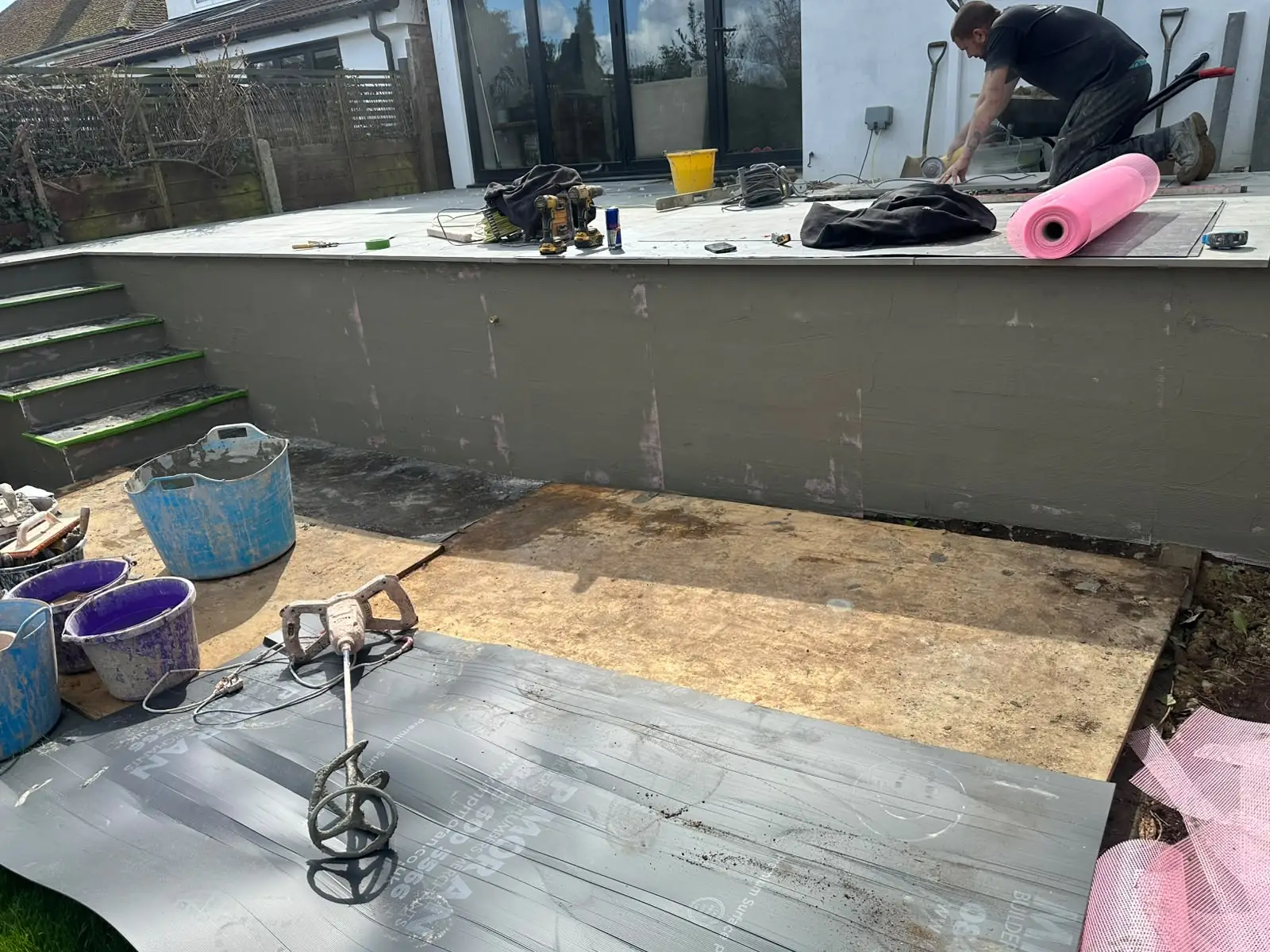
- Full mortar bed. The bed goes down solid, across the whole footprint of each slab.
- Prime and lay. Porcelain and most natural stone get a slurry primer on the back. Each slab is bedded and tapped to level, working to consistent joint widths.
- Cut in edges, steps and obstacles.
- Joint and clean. The joints are filled, the surface is cleaned off before anything sets on the face, and the patio is left to cure before it takes traffic.
Full bed, not five blobs
Slabs bedded on five dabs of mortar, one at each corner and one in the middle, is quick and it is wrong. The voids between the dabs hold water, which freezes; the unsupported middle of the slab cracks when something heavy lands on it; and on porous stone the dabs show through the face as permanent darker patches. A full bed supports the whole slab and leaves nowhere for water to collect. It is the single clearest signal of how a patio has been built, and it is invisible once the job is done, which is exactly why it is worth asking about beforehand.
Levels, falls and the house wall
Two rules do most of the work here.
The fall runs away from the building, to somewhere that can take the water: a border, a lawn, a channel or a gully. Enough slope to move water, not enough to feel like a slope underfoot.
The finished surface sits well below the damp proof course. The DPC is the barrier that stops ground moisture climbing the wall. Paving brought up level with it, or above it, lets water bridge past it, and the result shows up inside as damp at skirting level. Where a patio has to be close to the house, that is designed around with a channel or a drainage detail rather than ignored.
Steps and changes of level are part of the same problem. Consistent riser heights matter more than they sound: people trip on the one step that is different, not on the flight.
What decides the finish and the lifespan
- A full mortar bed, every slab.
- Falls set before laying, not corrected afterwards.
- DPC clearance where the paving meets the house.
- The right jointing. Brushed in mortar, slurry grout or a proprietary jointing compound, chosen for the material, the joint width and how wet the site is. Wrong jointing cracks out within a season.
- Sub-base under the bed. A mortar bed straight onto soil moves with the soil.
- Cutting. Clean cuts, sensible layout and no thin slivers against the edges.
Looking after the jointing
Sweep it and keep it clear of rotting leaves. Wash it down occasionally.
The part that needs care is the jointing, whatever the slab is made of. A jet wash held close, with a narrow jet, cuts joints out: it strips the compound and leaves a channel for water to sit in and for weeds to find. Use a wide fan, keep the lance well back and keep it moving.
How each material itself wants to be looked after, and whether it wants sealing, is on the patios page.
What to ask a paving contractor
- Full bed or dabs? The most useful question on this page.
- Which way does the fall run, and where does the water end up?
- How much clearance to the damp proof course?
- Are you priming the backs of the slabs? For porcelain the answer should be yes.
- What jointing compound, and why that one?
- What is the build up under the bed?
Working with BMS Building
Perry Niven quotes every paving job himself, with over twenty years behind the work.
- Tobermore Registered Paving Contractor, held by BMS (trading as BMS Building & Groundworks Ltd, formerly BMS Landscaping & Paving Ltd)
- Brett Approved Paving Contractor (BMS's own statement)
- Vetted TrustATrader member since 7 March 2018, membership TT13412
- Environment Agency registered waste carrier, CBDU453042, held by BMS (trading as BMS Building & Groundworks Ltd, formerly BMS Landscaping & Paving Ltd), so the old surface and spoil leave site legally
Paving is often done alongside a driveway so the levels, the falls and the drainage are planned as one thing. There are no prices here because cost follows the material, the area, the amount of cutting and what has to come out first. The quote follows a site visit, it is agreed upfront, and it does not change part way through the job.
Book a site visit
Choosing between porcelain, Indian sandstone, natural stone and granite is covered on the patios page. Paving is often planned alongside a driveway so the levels and the drainage are worked out once. Tell us what you have and Perry will come and look at it.
Common questions
What is the difference between a full mortar bed and spot bedding?
A full bed means mortar under the whole footprint of every slab. Spot bedding, sometimes called dot and dab or five blobs, means mortar at the four corners and one in the middle. Spot bedding is quicker and it is wrong. The voids between the dabs hold water, which freezes and lifts the slab; the unsupported middle cracks when something heavy lands on it; and on porous stone the dabs show through the face as permanent darker patches. It is invisible once the job is finished, which is exactly why it is worth asking about beforehand.
Why does a patio need to slope?
So water leaves it. A patio laid dead flat holds puddles, and standing water grows algae, works into joints and freezes. The fall should run away from the house, never towards it, and should end somewhere that can take the water. Alongside a house there is a second rule that matters more: the finished paving normally has to sit well below the damp proof course, so that rain splashing off it and water sitting on it cannot bridge into the wall. Raising a patio up against a wall is one of the most expensive mistakes in garden paving.
Can you lay new paving over an old patio?
It is rarely the right answer. The old surface is usually laid to the old falls, may be hollow underneath, and adding another bed and slab on top raises the finished level, which is exactly the thing that causes damp problems next to a house. Where the existing base is a sound concrete slab with the right levels and falls it can sometimes be used. That is a decision made after looking at it, not before.
How long does a patio take?
It depends on the size, the material, how much has to come out first and how much cutting the layout needs. Digging out, the sub-base and the bed take the bulk of the time. Laying the slabs is quicker than people expect, and then the jointing goes in and the patio is left alone to set before it takes traffic. You get the expected timescale with the quote, once the site has been seen.