
Landscaping and garden design
BMS Building designs and builds gardens across St Albans, Hemel Hempstead, Watford and Harrow. The work covers hard landscaping, soft landscaping, turf laying, stepped pathways and garden walls, and Perry Niven quotes every job himself after a site visit, with over twenty years behind it.
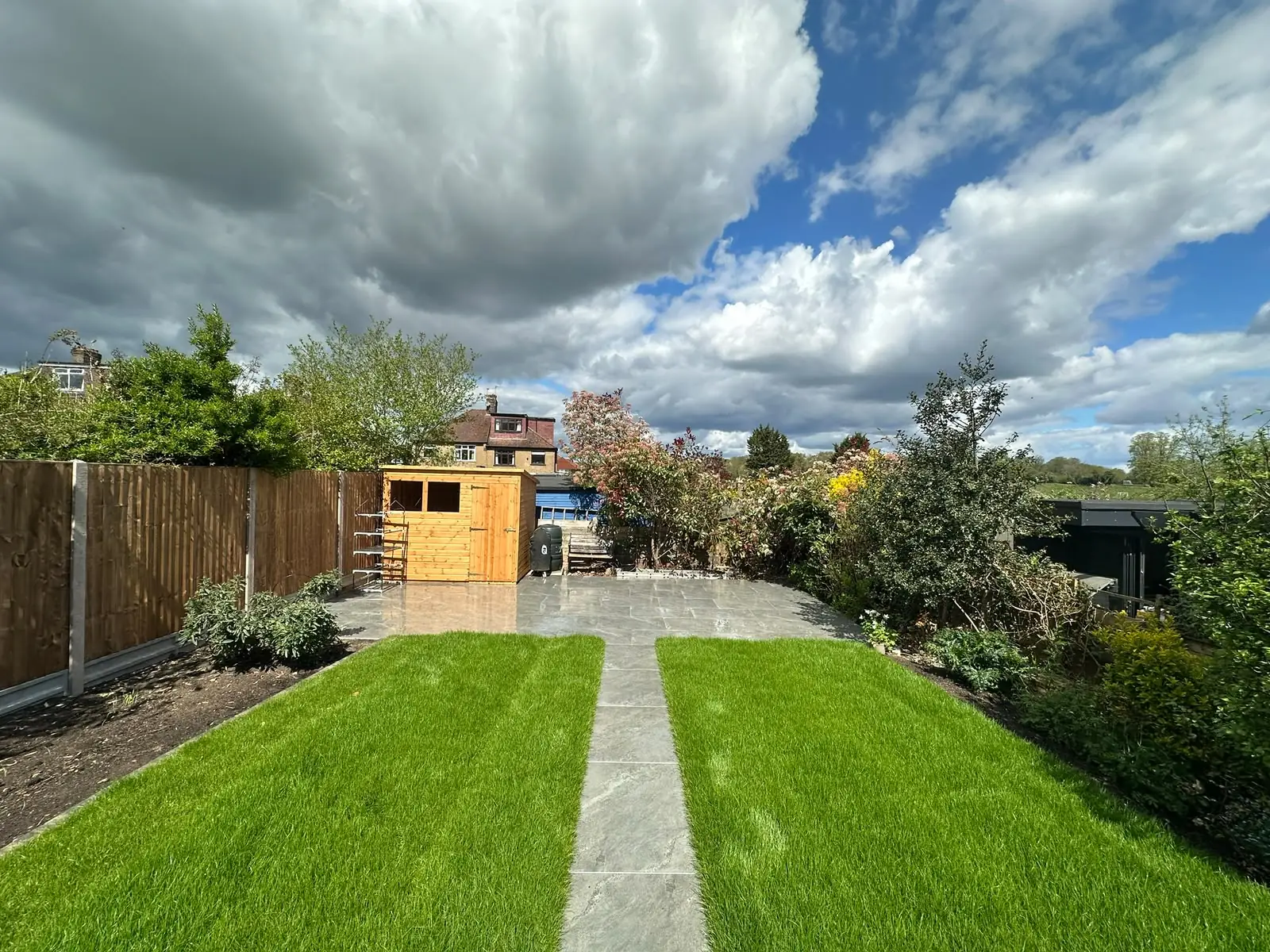
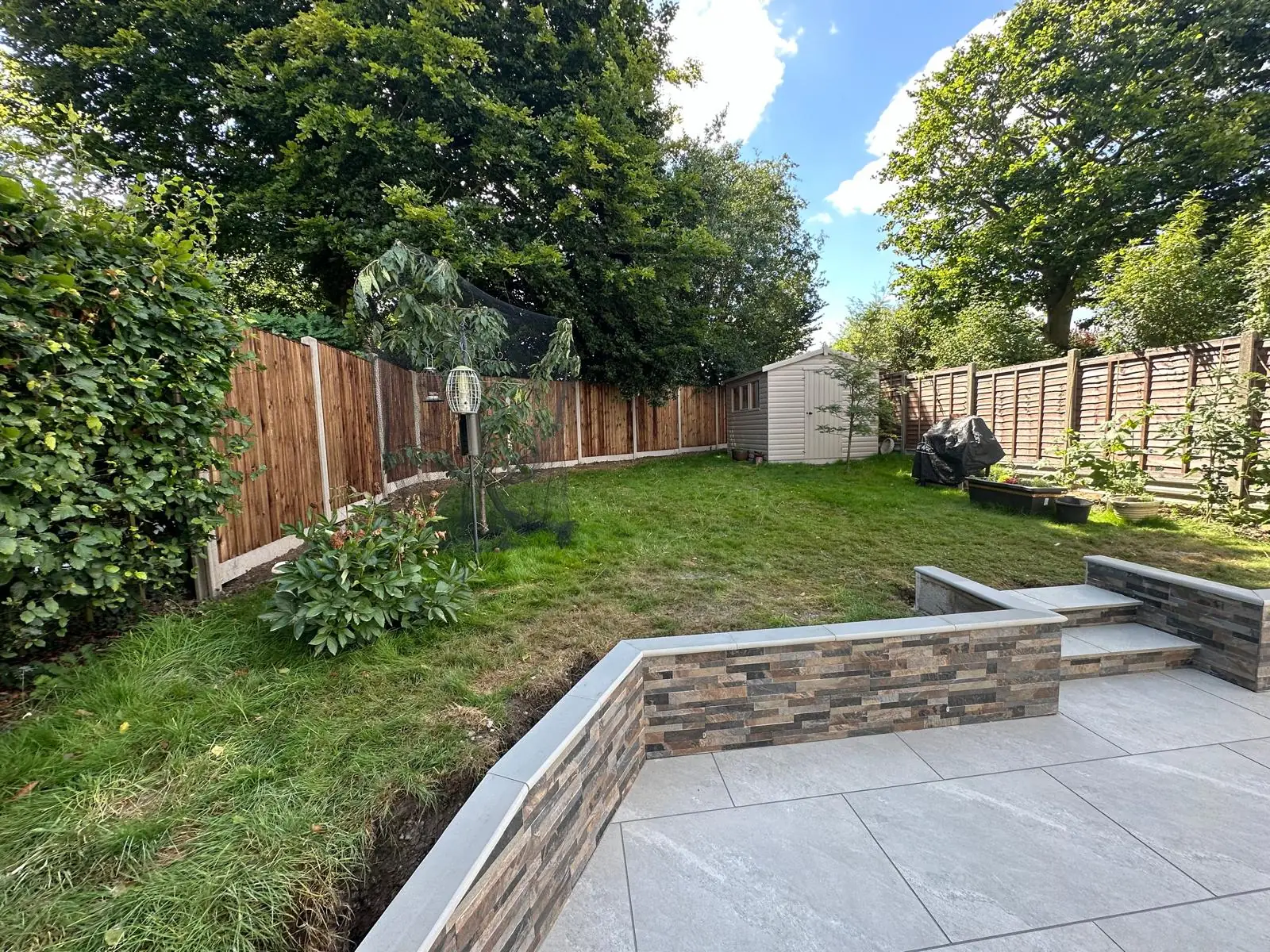
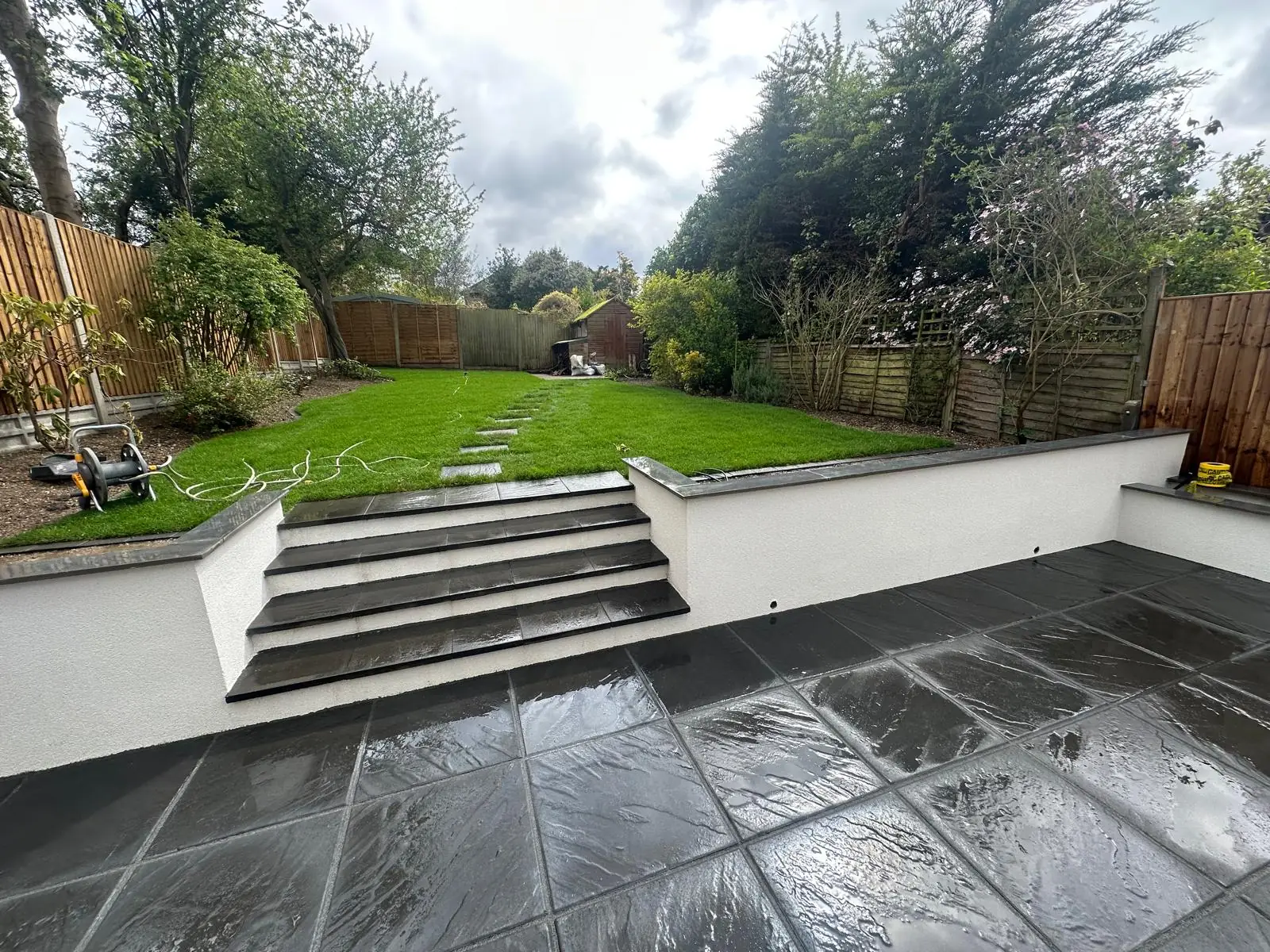
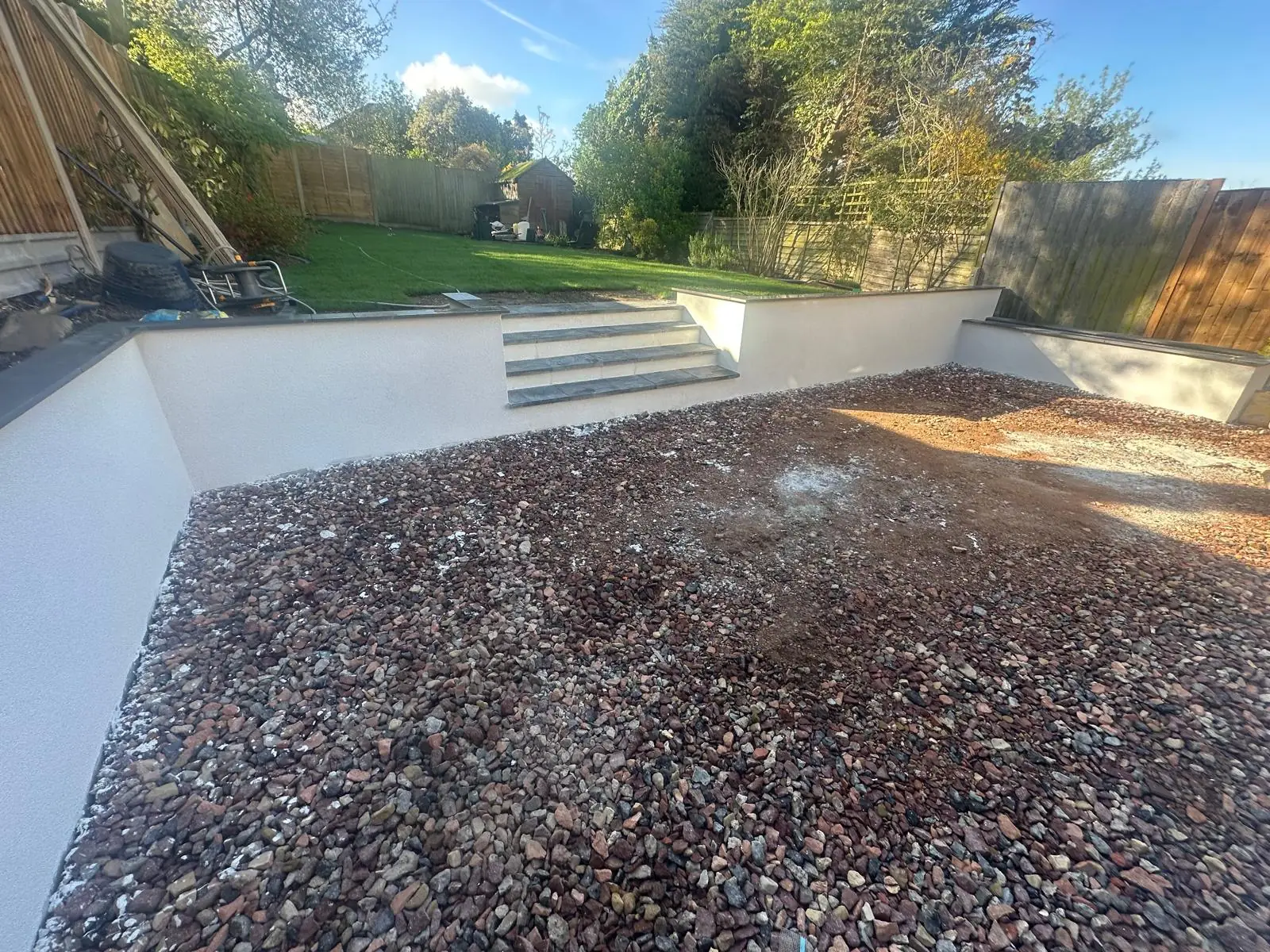
Landscaping is the work that changes the shape of a garden rather than the planting in it. Levels, drainage, what is built and where, and the ground everything else sits on. Most of a garden's cost and nearly all of its lifespan are decided in that stage, before anything looks like a garden at all.
BMS Building works across St Albans, Hemel Hempstead, Watford and Harrow, and more widely across Hertfordshire and the northwest London border, including Borehamwood, Rickmansworth and Bushey.
Garden design
Design here starts on site rather than on paper. What the ground actually does with water, where the sun falls, which way the garden slopes, what is worth keeping and what has to come out, where the existing levels sit against the house and the boundaries.
Those constraints decide more than taste does. A seating area wants to be where the sun is in the evening rather than where the plan has space for it. A lawn wants the flattest part of the site, or it wants a level built for it. A path wants to go where people already walk, because a path that ignores that gets walked around.
The output of the design stage is an agreed layout: what goes where, at what level, in what material, and in what order it gets built. That is what the quote is priced against. Where a garden needs one, the layout is drawn up as a CAD drawing.
Hard landscaping
Everything built. Patios, paths, steps, walls, edging and the levels underneath them.
The construction is the same discipline as a driveway, at lighter loads: dig out, a compacted sub-base, a bed suited to the material, falls set before anything is laid, and edges restrained so nothing creeps. A patio or path built straight onto soil moves when the soil moves, which is every winter.
Patio and path surfaces, the materials and how they are laid, are covered on the paving page. Where a garden is being done at the same time as the front of the house, the driveway and the garden get planned together so the levels and the drainage are worked out once rather than twice.
Levels and drainage
This is the part people do not see in a finished garden and the part that decides whether it works.
Changing a level means cutting into the slope, building up, or both, and holding the difference with a retaining structure. Water has to have somewhere to go that is not the house, not the neighbour, and not the lowest corner of the lawn. Anything hard against the building has to sit well below the damp proof course, so rain coming off it cannot bridge into the wall.
Get this stage wrong and the symptoms turn up later as a boggy lawn, a patio that puddles, a wall that leans, or damp inside.
Stepped pathways
Steps are where a sloping garden becomes usable, and they are the one element people genuinely hurt themselves on.
- Every riser in a flight is the same height. People trip on the one step that is different, not on the flight. This is the single most common fault in garden steps.
- The going is deep enough for a whole foot, so nobody is coming down on their heel.
- Treads fall very slightly forward so water runs off rather than sitting at the back of the tread or draining into the riser.
- The flight sits on a foundation, not just the bottom step. Steps that are bedded on made up ground settle unevenly, and uneven is exactly what they must not be.
- The surface has grip when wet. Smooth material on an outdoor step is a decision to check rather than a default.
Garden walls
Walls do two completely different jobs and they are not the same structure.
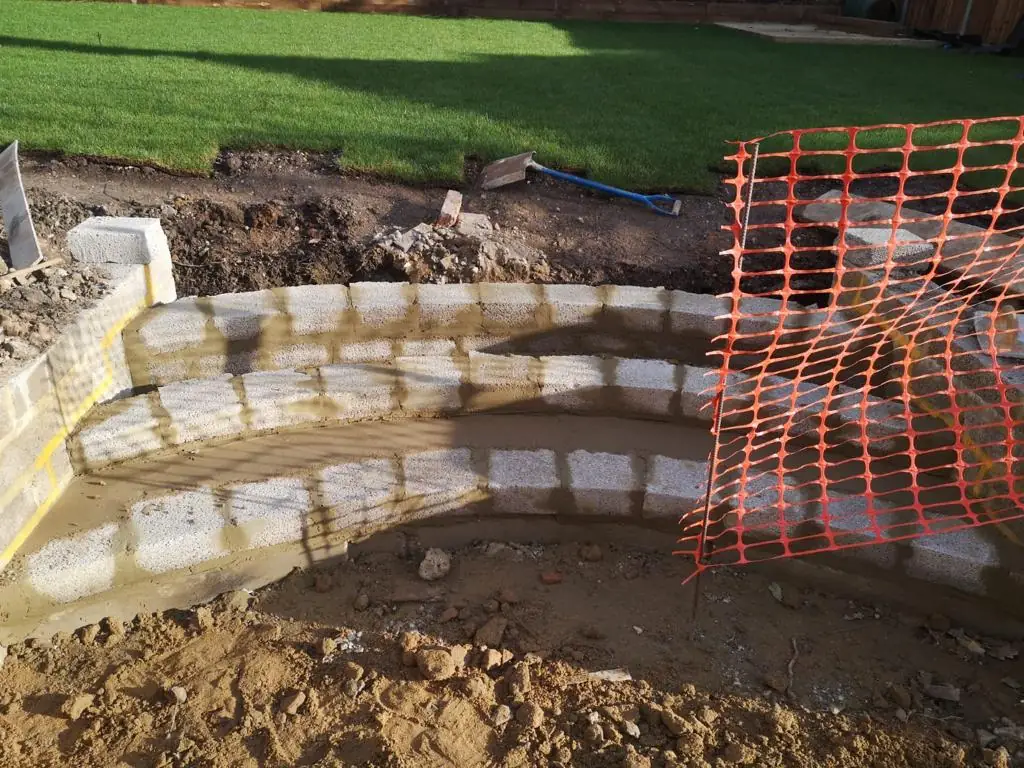
A free-standing wall divides or encloses. It needs a concrete foundation sized for its height, a coping to throw water off the top so the wall is not soaking from above, and movement joints on a long run.
A retaining wall holds ground back, and it is carrying a load that does not stop. It needs drainage behind it and a way for water to escape through it, because saturated ground behind a wall is what pushes walls over. A retaining wall built as though it were a garden wall is the most expensive mistake in this list.
Height matters before anything is built. The permitted development limits for a wall are the same ones that apply to a fence or a gate, and they are set out in full on the fencing page.
The detail on walls, footings, damp proof courses, coping, movement and what makes a retaining wall a different structure, is on the bricklaying page. That page also covers the Party Wall etc. Act 1996, which applies to a wall built on or up to a boundary line.
Soft landscaping and turf
Soft landscaping is the ground and what grows in it. On site that means clearance, topsoil, levelling and turf.
Turf is the part clients notice and the part that most often fails, and it almost always fails on the ground underneath rather than on the turf itself:
- Clear properly. Old surface, roots and stones out. Perennial weeds that get rotavated instead of removed come back through the new lawn.
- Break the ground up rather than raking the top of it. Turf laid on a compacted pan roots into a few millimetres and dries out.
- Topsoil to an even depth of 60 to 80mm across the whole area, not just where it looked thin.
- Level, firm and rake to a fine tilth. Soft spots become dips, and a dip in a lawn is permanent.
- Lay it fresh. Turf is perishable and is laid as soon as possible after it arrives, joints staggered like brickwork and butted tight with no gaps to dry out.
- Water it in thoroughly, and keep watering while it roots. This is the part that falls to the householder, and it is the most common reason a good lawn fails in its first season.
A return visit to check the lawn is available if you ask for one.
Planting beyond turf is discussed at the site visit rather than offered as a set scheme.
Where a lawn is in deep shade, is too small to recover from the use it gets, or is awkward to mow, artificial grass is worth weighing against turf. That page sets out the trade-offs both ways. We lay both.
Clearance and waste
A garden being rebuilt produces green waste, broken slabs, rubble and spoil, usually all at once and usually more than people expect.
BMS (trading as BMS Building & Groundworks Ltd, formerly BMS Landscaping & Paving Ltd) holds an Environment Agency waste carrier licence, number CBDU453042. Everything that comes off the site is carried and disposed of legally.
The legal duty of care sits with whoever produced the waste, not only with whoever carries it away, and it works differently for a householder than for a business. It is set out in full, with the gov.uk sources and the link to the public register, on the groundworks page.
What decides the finish and the lifespan
- Levels and drainage, settled before anything is built.
- What is under the hard landscaping. A compacted sub-base, not soil.
- Retaining structures designed as retaining structures, with drainage behind them.
- Consistent risers on every flight of steps.
- Ground preparation under turf, and topsoil at an even depth.
- The order of work, so nothing finished gets walked over or taken back up.
What to ask a landscaping contractor
- What is the order of work? Someone who has built gardens will answer this without thinking about it.
- Where does the water go? They should be able to point at it.
- Is that wall retaining or free-standing, and what is the foundation? If the answer is the same for both, ask again.
- What goes under the patio? Sub-base, or soil.
- How much topsoil under the turf, and how is the ground prepared?
- What is your waste carrier licence number?
- Are all the step risers the same height?
Working with BMS Building
Perry Niven founded BMS Building and quotes every job himself. Over twenty years of driveways, patios, groundworks and gardens sit behind the work.
- Vetted TrustATrader member since 7 March 2018, membership TT13412, with no missed appointments in the last six months
- Environment Agency registered waste carrier, CBDU453042, held by BMS (trading as BMS Building & Groundworks Ltd, formerly BMS Landscaping & Paving Ltd)
Pricing is open and upfront. There are no prices on this page because a garden's cost depends on its size, the levels, what has to come out first, what is built and what materials you choose. Every quote follows a site visit. The price agreed at the start is the price at the end, and it does not change part way through the job.
Book a site visit
Tell us what the garden is like now and what you want to do with it, and Perry will come and look at it.
Common questions
What is the difference between hard and soft landscaping?
Hard landscaping is everything built: patios, paths, steps, walls, edging and the levels underneath them. Soft landscaping is everything that grows, along with the ground it grows in, which in practice means topsoil, levelling and turf. Most gardens need both, and the hard landscaping goes in first because it sets the levels everything else works to. A garden quoted as soft landscaping alone, on a site that needs a level changed or a wall built, is a quote for half the job.
What order does a garden get built in?
Clearance first, then levels and drainage, then anything structural such as retaining walls and foundations, then the hard landscaping, then boundaries, and soft landscaping and turf last. The order is not a preference. Turf laid before the paving is finished gets walked over and wrecked, and a level changed after a wall is built means taking the wall down. It is also why a wet week can move a whole job: the early stages are groundwork.
How do you prepare the ground before laying turf?
The old surface, roots and stones come out, the ground is broken up rather than just raked over, and topsoil is brought to an even depth of 60 to 80mm across the whole area. Then it is levelled, firmed and raked to a fine tilth so there are no soft spots for the turf to sink into later. Turf is a living thing with a short shelf life, so it is laid as soon as possible after it arrives, joints staggered and butted tight, and watered in thoroughly. Ground preparation is most of the work and it is the part that decides whether the lawn takes.
What happens to the waste from a garden clearance?
It leaves site legally. BMS (trading as BMS Building & Groundworks Ltd, formerly BMS Landscaping & Paving Ltd) holds an Environment Agency waste carrier licence, number CBDU453042, which covers green waste, broken slabs, rubble and spoil. It is worth asking any contractor for their number, because waste that is fly tipped can be traced back to the property it came from, and the householder can be the one who hears about it.