
Driveways in Harrow | Block Paving & Resin
BMS Building lays driveways across Harrow and the areas around it, including Pinner, Northwood, Stanmore and Ruislip, in block paving and resin bound. The base is dug to what the ground needs and the crossover position is checked before anything is priced.
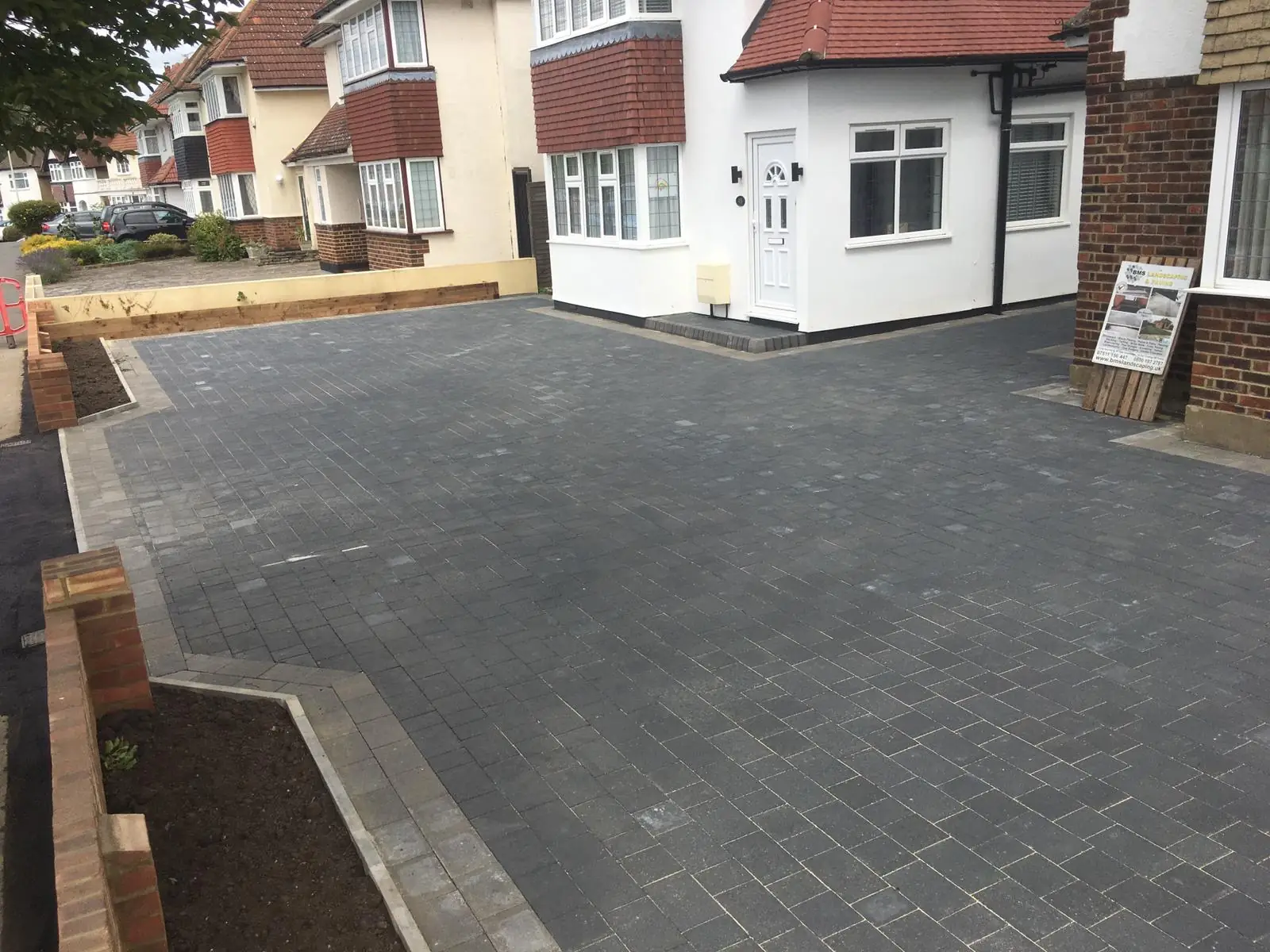
Covering Harrow
Harrow is about half an hour from Watford, where BMS is based, and is covered on the same round as Pinner, Northwood, Stanmore and Ruislip. Two things shape how a driveway job runs here rather than in the Hertfordshire towns. The first is parking: controlled parking zones cover parts of the borough, so where a skip or a grab lorry stands, and when, is agreed with the property before the first morning rather than on it. The second is the crossover. If a car is going to cross the footway, that is a vehicle crossover application to the London Borough of Harrow, and it runs on the council's timetable rather than ours. Northwood and Ruislip are in the London Borough of Hillingdon, which takes its own dropped kerb applications. It is raised at the site visit and started early, because a drive built on the assumption that a crossover will be granted is a drive that may not be legally usable. Perry Niven prices the work after seeing the frontage, the fall and what is under the existing surface.
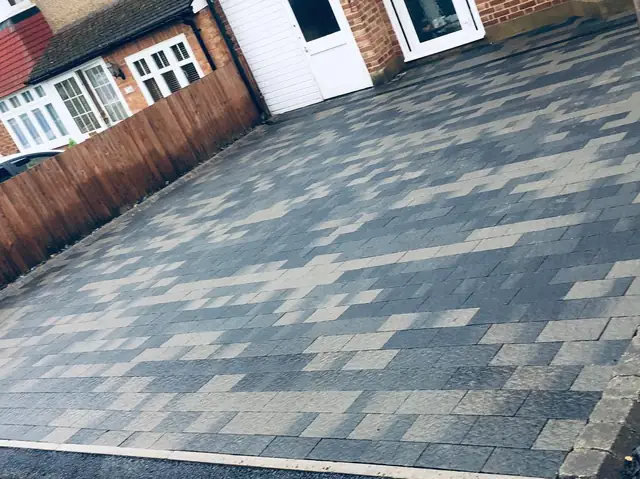
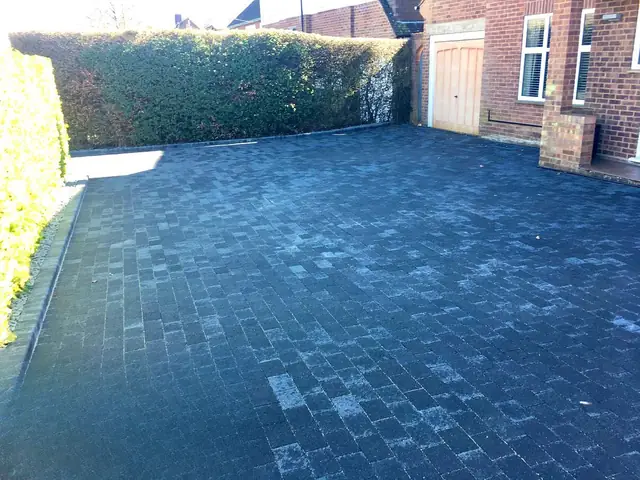
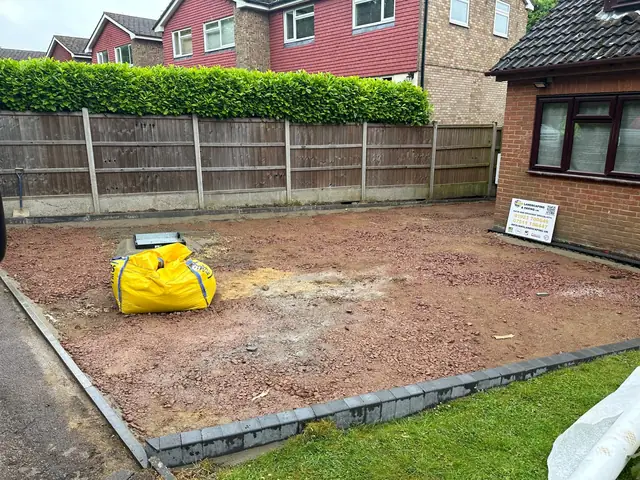
Driveways in Harrow
Harrow is the one area BMS Building covers that sits in Greater London rather than Hertfordshire, and for driveways that changes three practical things: the ground, the crossover, and who you ask for permission.
The same round covers Pinner, Northwood, Stanmore and Ruislip. The base is in Watford, about half an hour away, and that is said plainly rather than dressed up as a local office.
Metro-land frontages
The council's own character study puts almost two-thirds of Harrow's housing in the inter-war period, much of it semi-detached and built as the Metropolitan Railway pushed out. The frontages are a consistent size, which makes driveways here more predictable than in St Albans.
What is not predictable is the fall. There is often less height between the damp proof course and the kerb than a homeowner expects. With that little to play with, where the water goes has to be designed. A surface relaid at the old level because that is what was there before is how a new drive starts putting water against the brickwork.
The original crossover is also frequently narrower than a modern car wants, which is worth knowing before the surface is chosen rather than after it is laid.
The crossover is the council's decision
If a car is going to cross the footway, that is a vehicle crossover, and in Harrow the application goes to the London Borough of Harrow. The council approves it and prices it, only its own contractors may build it, and it happens on its timetable. In Northwood and Ruislip it goes to the London Borough of Hillingdon instead.
It is raised at the site visit and started early. We will tell you whether your frontage needs one and what the drive has to be built to allow for. We will not begin work on the assumption that it will be granted.
London Clay
Most of the borough sits on London Clay, which shrinks as it dries and swells as it wets. Clay that moves takes a thin or badly compacted sub-base with it, and the surface follows.
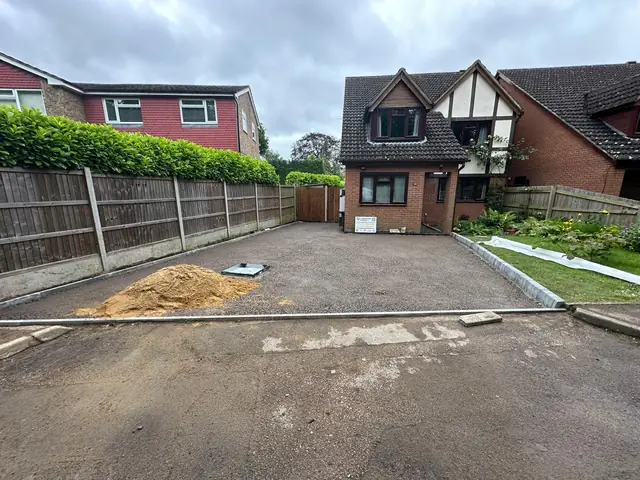
So the dig depth is set from what the ground shows on your frontage, and the base goes in and is compacted in layers. That is unglamorous and it is most of what decides whether the drive is still flat in ten years.
Block paving or resin
Block paving is individual units on a compacted sub-base and laying course, with restrained edges. It lifts and relays in sections if a service is ever dug up, and permeable ranges let water through the joints.
Resin bound is aggregate and resin trowelled onto a solid base: continuous, no joints to weed, and it needs the base sound and cured first.
Which suits depends on what is already there, the fall and the drainage. That is the site visit.
Parking, and how the waste leaves
Controlled parking zones cover parts of the borough. Where a skip or a grab lorry stands, and when, is agreed with the property before the first morning rather than worked out on it.
Recent work near Harrow
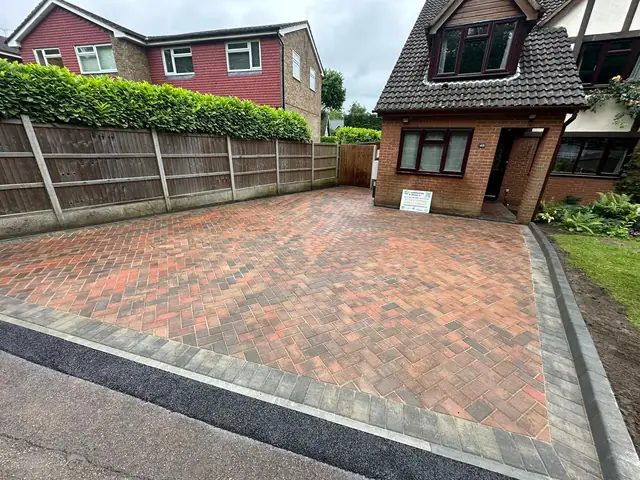
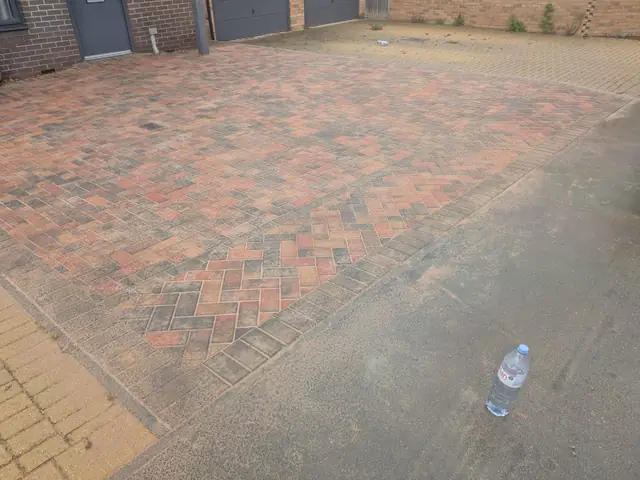
In Ruislip, BMS Building took up two neighbouring driveways of old red block paving that had gone to weeds and relaid them, with the shared access between the houses, as one charcoal block paved frontage of 136 square metres. A new brick front wall, 21 metres long with seven piers, went along the boundary, and the job took about two weeks.
What Harrow properties are like
The council's own character study puts almost two-thirds of Harrow's housing stock in the inter-war period, much of it semi-detached, and driveways here are unusually consistent as a result. The frontages are a similar size, the original crossovers are frequently narrower than a modern car wants, and the fall from the house to the footway is shallow. That last point is the one that decides the build: with little height between the damp proof course and the kerb, the surface has to be designed to carry water away from the wall and to somewhere it can actually drain, rather than simply relaid at the old level. The ground is London Clay across most of the borough, which the British Geological Survey describes as very susceptible to shrinking and swelling as it dries out and wets. Clay moves, so the sub-base under a drive is dug to a depth measured on site and compacted properly rather than taken from a standard figure. The third difference is administrative: Harrow is a London borough, so planning, conservation area coverage and the crossover application all go to the London Borough of Harrow.
Harrow questions
Do I need a dropped kerb, and can you sort it?
- If a vehicle will cross the footway you need a vehicle crossover, and in Harrow that is an application to the London Borough of Harrow. The council approves it and prices it, on its timetable, and only its own contractors may build it. In Northwood and Ruislip the application goes to the London Borough of Hillingdon. We will tell you at the site visit whether your frontage needs one and what the drive has to be built to allow for, and we will sequence the work around it. We will not start a drive on the assumption that one will be granted.
Do I need planning permission as well?
- Possibly. The national rule is that more than five square metres of new or replacement hard surface in a front garden needs permission unless it is permeable, or unless the water drains to a lawn or border. Permeable block paving and resin bound over a permeable build up both meet it. A conservation area does not change that rule on its own; an Article 4 direction can, and several of Harrow's conservation areas carry one. The London Borough of Harrow is the authority on your address.
My drive is a 1930s semi frontage. Anything different about it?
- Usually the fall and the width. There is often less height between the damp proof course and the kerb than people expect, so drainage is a design decision rather than an afterthought, and the original crossover is frequently narrower than a modern car needs. Both are measured on the visit because both change the job.
Is clay a problem for a driveway?
- It is a reason to dig properly rather than a reason not to. London Clay shrinks and swells with the seasons, so a thin or poorly compacted sub-base moves with it and the surface follows. The depth is set from what the dig shows on your frontage and the base is compacted in layers. That is most of what decides whether a drive is still flat in ten years.
We also cover Pinner, Northwood, Stanmore, Ruislip and Wealdstone from the same base.