
Patios in St Albans | Porcelain, Sandstone & Granite
BMS Building builds patios across St Albans in porcelain, Indian sandstone, natural stone and granite. Which material suits depends on how much sun the space gets, how it will be used and the house it sits against, and that is worked out on site.
Covering St Albans
A patio in St Albans is usually decided by two things that have nothing to do with the slab: how much light the space gets and whether the ground is level. Plots behind the central terraces are long, narrow and often shaded down one side by the neighbouring building, which pushes the choice towards a denser material that does not hold moisture and grow algae. The wider post-war gardens out towards Marshalswick and Jersey Farm tend to be more open and give a free choice. The second is the fall. Gardens here frequently drop away from the house, so a level terrace means cutting in and retaining, and that retaining wall is part of the patio job rather than a separate one. Both get measured at the site visit. Access shapes the rest: where the only route is through the house, slabs come in by hand and that is priced rather than sprung on the day.
Patios in St Albans
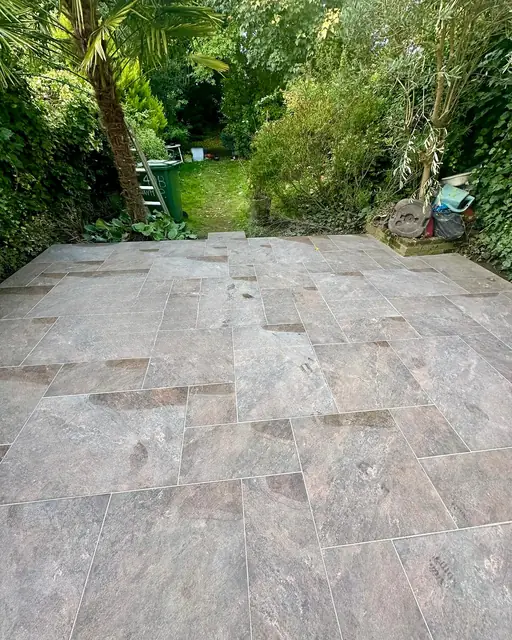
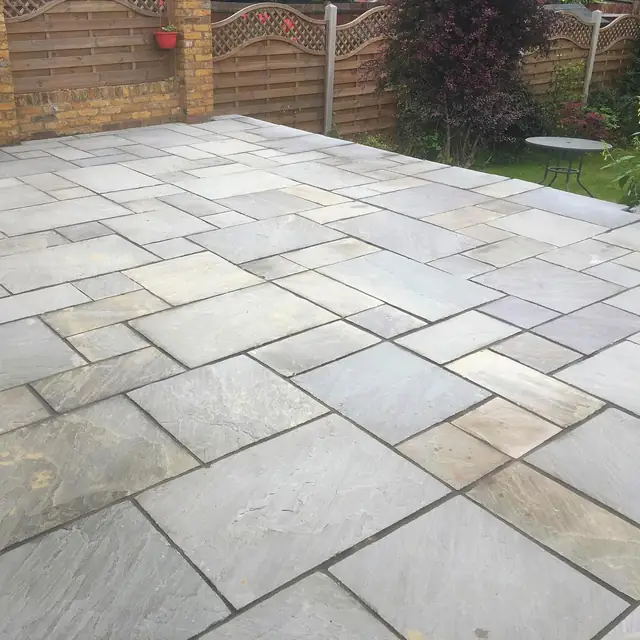
A patio is the one piece of hard landscaping people actually sit on, and the material decision is the part most often made from a photograph and regretted in February.
BMS Building builds patios across St Albans in porcelain, Indian sandstone, natural stone and granite.
The aspect decides more than the catalogue does
A long narrow garden with a building down one side gets less direct sun than its size suggests, and plenty of St Albans plots behind the central terraces are exactly that.
A porous material in a shaded space holds moisture, and moisture is what algae grows on. The same sandstone that weathers beautifully in an open garden goes green faster in a shaded one.
That is a maintenance choice rather than a quality one, and it is worth making with your actual garden in front of you rather than a showroom.
What suits what
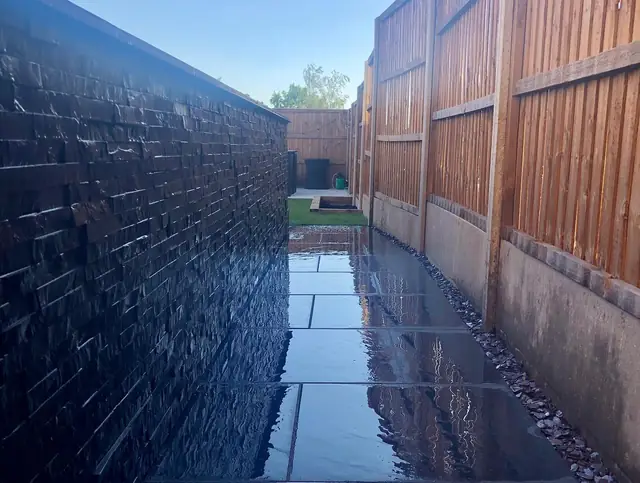
Porcelain is dense, dimensionally consistent and low maintenance. Indian sandstone is warm, riven, forgiving of an imperfect edge, and it weathers. Granite is the hardest wearing and the most stable in colour. Natural stone is the category the second and third sit inside rather than a separate thing.
The full comparison, and what each is actually like to live with, is on the patios page. This page is about what St Albans does to that choice.
Falls and the damp proof course
The finished level has to sit clear below the DPC, and on the older housing near the centre the DPC sits low. Where the garden also falls towards the house, that constraint can decide the whole layout.
A level terrace on a sloping garden
Means retaining the difference, with drainage behind the wall. That work is part of the patio here, not an extra, and it is measured at the site visit.
How it is built
Compacted sub-base, full mortar bed, falls away from the house. The method is on the paving page and it matters more than the material.
Recent work near St Albans
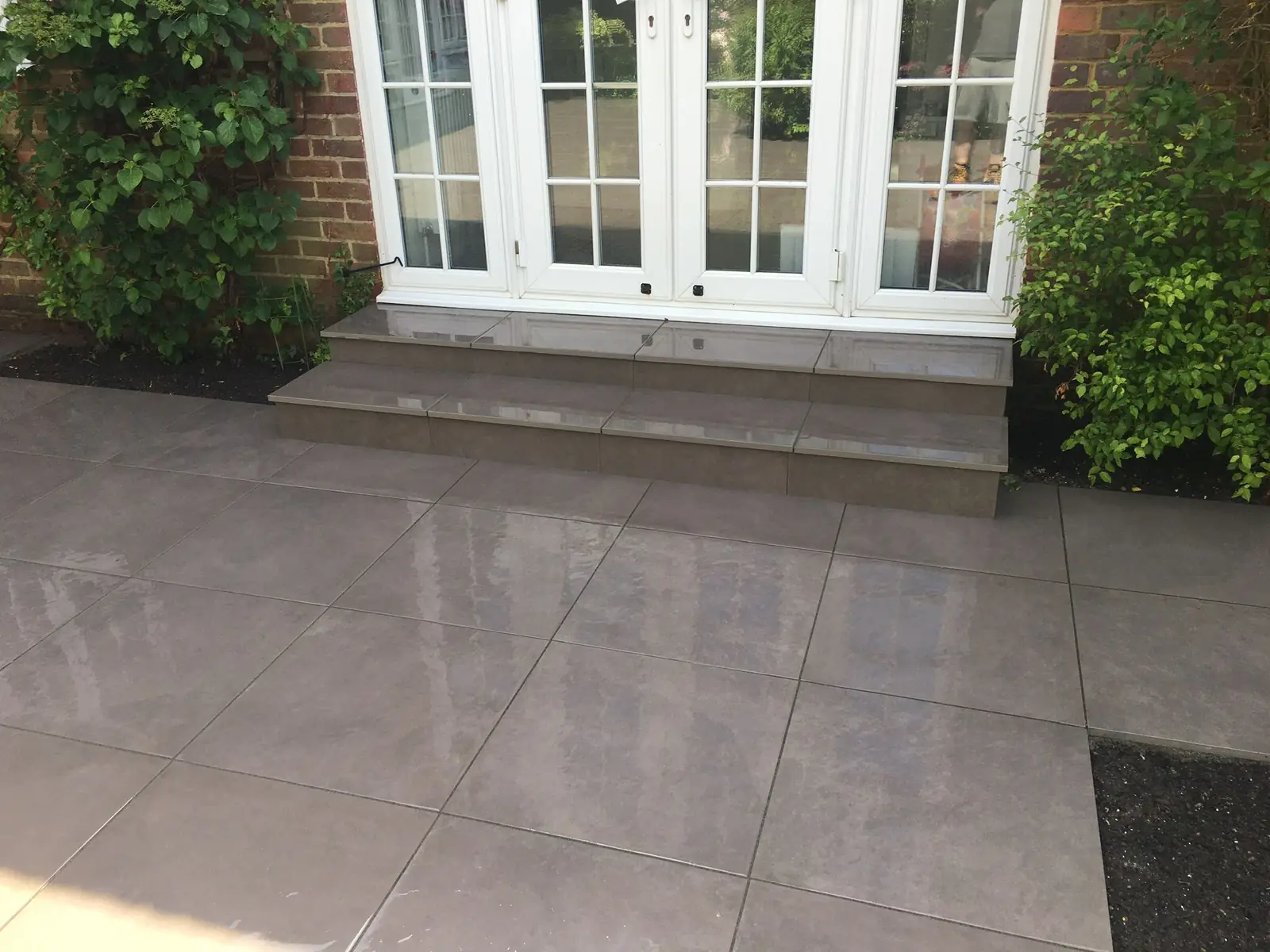
In Radlett, just south of St Albans, BMS Building laid a terrace of large format beige porcelain across the back of a house, with a step down from the French doors and the porcelain carried along the side of the house as a path.
What St Albans properties are like
The shading on St Albans plots is the local factor that most often decides the material, and it is worth being specific about why. A long narrow garden with a building along one side gets less direct sun than its size suggests, and a porous material in a shaded space holds moisture, which is what algae grows on. That is a maintenance decision made at the point of choosing, not a fault in the stone. The second factor is the damp proof course on the older housing near the centre: it sits low, so the finished patio level has to stay clear below it, and on a garden that also falls towards the house that constraint can decide the whole layout. The third is consent. A conservation area does not change the permitted development rules for a patio on its own, but an Article 4 direction or a planning condition can, and two Article 4 directions apply in parts of the St Albans Conservation Area. At a listed building a new wall needs permission, and works affecting the building's character need listed building consent. St Albans City and District Council is the authority on an address.
St Albans questions
My garden is shaded. Which material should I choose?
- Generally a denser, less porous one. A porous material in a shaded space holds moisture, and moisture is what algae grows on, so a sandstone patio down the shaded side of a terraced garden will go green faster than the same stone in an open one. Porcelain and granite are both dense. It is a maintenance choice rather than a quality one, and it is worth making with the actual aspect of your garden in front of you.
How is the patio built?
- On a compacted sub-base, on a full mortar bed rather than spot bedding, laid to a fall away from the house and finishing clear below the damp proof course. The paving page sets out the method in full. It matters more than the material does, and it is the part you cannot see once the job is finished.
My garden slopes. Can I still have a level patio?
- Yes, and it means retaining the difference. Either cut into the slope and hold the cut, or build up and hold the fill, with drainage behind the wall so water cannot build up against it. That retaining work is part of the patio job here rather than an extra, and it is measured and priced at the site visit.
We also cover Radlett, Park Street, London Colney, Chiswell Green and Bricket Wood from the same base.