
Fencing in Hemel Hempstead | Close Board & Picket
BMS Building installs close board and picket fencing across Hemel Hempstead from a base in Watford. On the new town estates most fencing is rear and side boundaries rather than front, and the posts are specified for the ground and the slope they are going into.
Covering Hemel Hempstead
Fencing is one of the quicker jobs on this site and Hemel Hempstead is twenty minutes from Watford, where BMS is based, so a run can usually be scheduled without a long wait. Access is rarely the problem it is elsewhere: the new town estates have off-street space and side access on most plots, so panels and posts go straight round and the old fence comes straight out. Two things do need working out on site. The first is the slope. The town is built on the sides of the Gade and Bulbourne valleys, and a boundary can fall noticeably along its length, and a close board fence built up on site can follow that fall rather than stepping down it, which looks better and leaves no gaps underneath. That is a decision made with a level on the boundary, not from a photograph. The second is which boundary is actually yours, which is a deeds question rather than a fencing one.
Fencing in Hemel Hempstead
Most fencing enquiries in Hemel Hempstead are about the back garden and the sides, and what decides the job is usually the ground rather than the style.
Front, rear and side
Hemel was designated a new town in 1947, and most of it went up in planned neighbourhoods from 1949 into the 1970s.
The rear and side boundaries are where most of the fencing work is. Where somebody does want a front boundary it is worth checking the deeds first: a covenant about front boundaries is separate from planning permission and easy to miss.
Planning has its own limit either way. One metre next to a highway used by vehicles or its footpath, two metres elsewhere. A conservation area does not lower that on its own; an Article 4 direction or a planning condition can remove it, and it does not apply at or around a listed building. The Old Town, north of the town centre, is a conservation area. Dacorum Borough Council is the authority.
Close board and picket
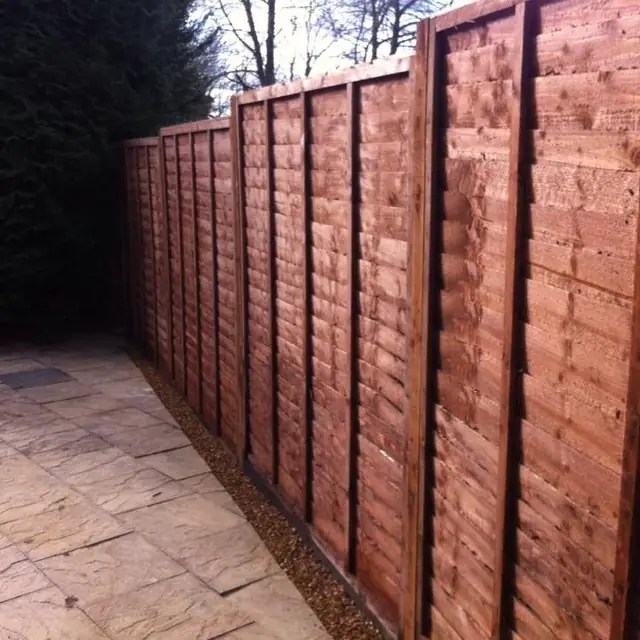
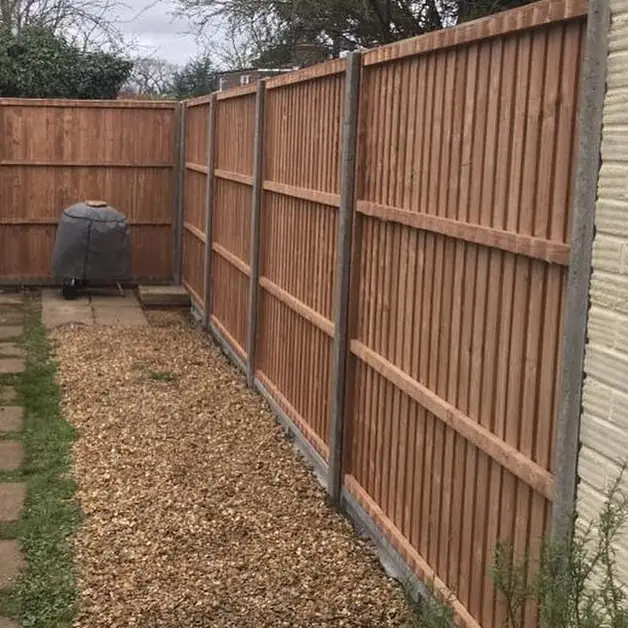
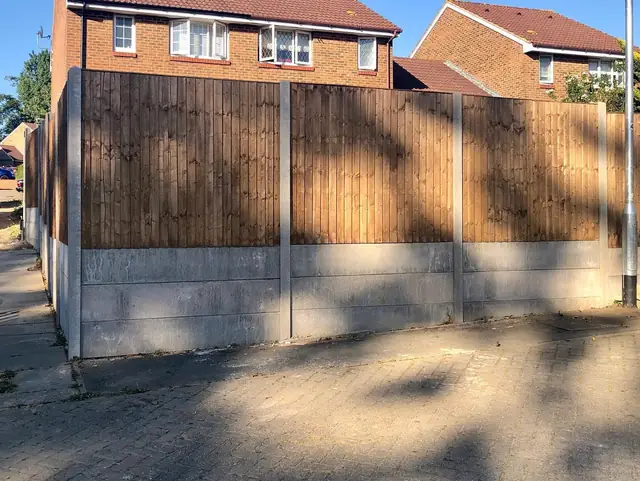
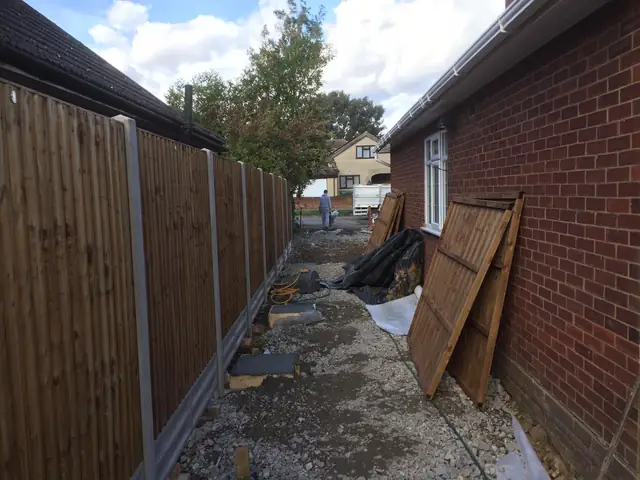
Close board is feather edge boards on horizontal rails between posts, built up on site. Solid, private, and it can be raked to follow a falling boundary.
Picket is spaced palings on rails: lower, open, and a front boundary fence more often than a rear one.
Why built on site matters on a slope
Parts of Hemel sit on a real gradient. A panel fence on a falling boundary steps down and leaves a triangle of daylight under each panel.
Close board built up on site follows the fall instead. It looks better, it leaves nothing underneath for a dog to find, and it is decided with a level on the boundary rather than assumed.
The posts are the fence
Everything else is cladding. Ground here is chalk, with clay-with-flints over much of the higher ground, and on a sloping plot a post hole can meet water, so depth and setting come from what the hole shows.
A post that moves takes the run with it, and that is the failure that turns a cheap fence into two fences.
Access, for once, is easy
Most plots on the estates have side access and off-street space, so panels and posts go straight round and the old fence comes straight out. That keeps a Hemel fence run quicker and cheaper than the same length behind a terrace in St Albans.
Recent work near Hemel Hempstead
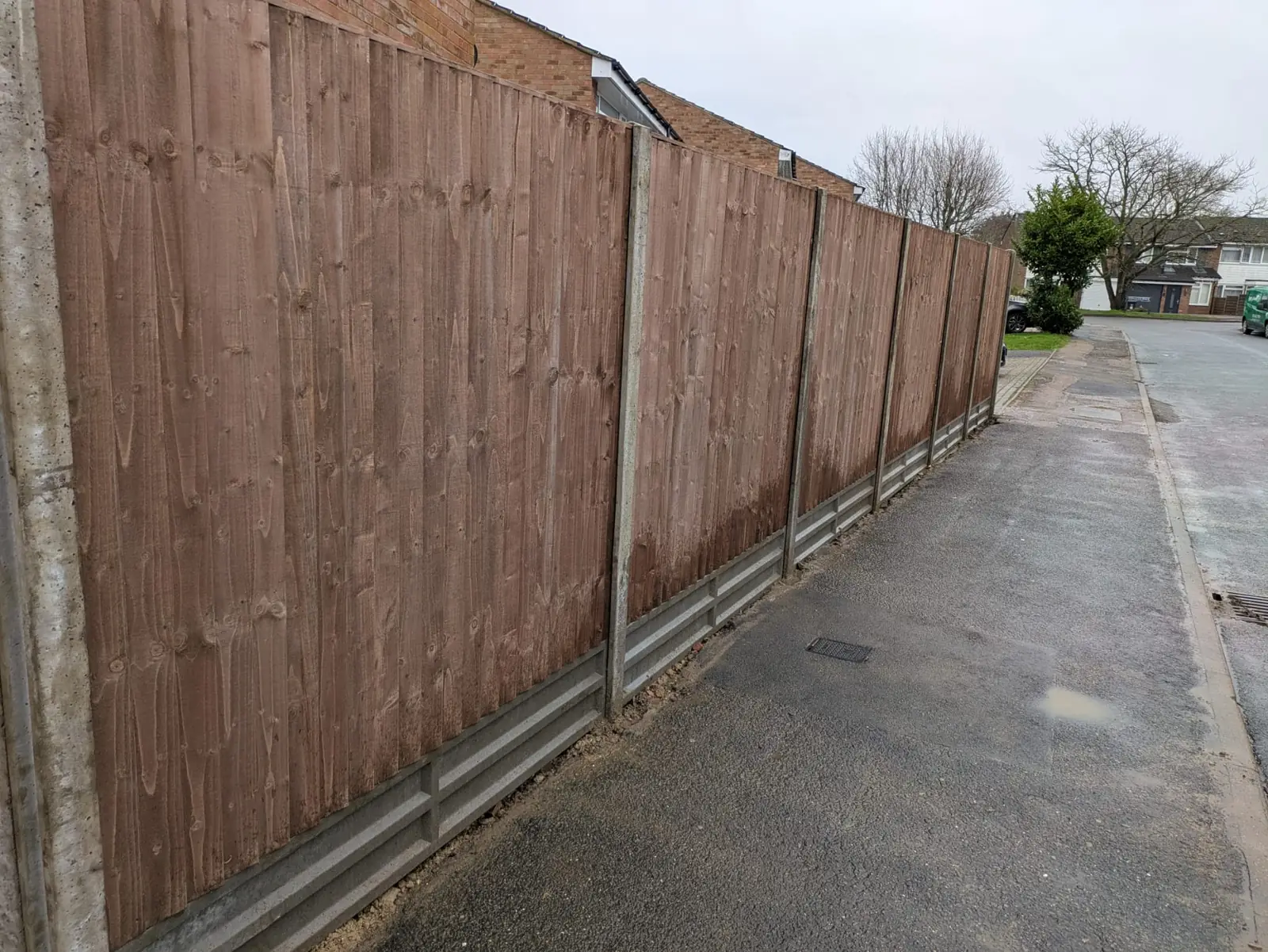
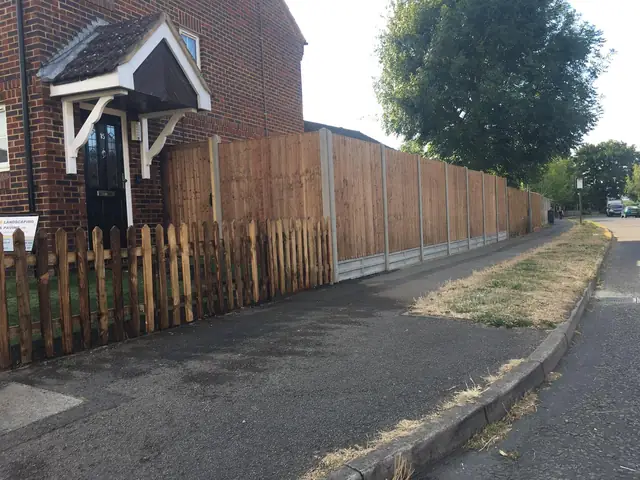
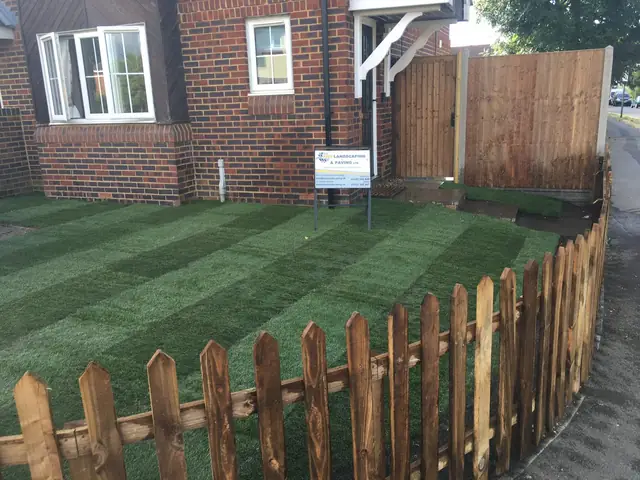
On a corner plot in Hemel Hempstead, BMS Building fenced an open garden along the road. The old materials came out, the line was marked and the concrete posts were set in concrete, then eleven 6 foot close board panels went up on concrete gravel boards, with a matching close board gate fitted with hinges, a lock and clasps.
What Hemel Hempstead properties are like
Hemel Hempstead was designated a new town in 1947, and most of its housing went up in planned neighbourhoods from 1949 into the 1970s. The majority of fencing enquiries here are rear and side boundaries, and where somebody does want a front boundary it is worth checking the deeds for any covenant before assuming it is a free choice, because a covenant is separate from planning permission. Planning has its own rule regardless: one metre next to a highway used by vehicles or its footpath, two metres elsewhere. A conservation area does not lower that on its own, but an Article 4 direction or a planning condition can remove it, and it does not apply at or around a listed building. The Old Town, north of the town centre, is a conservation area, and Dacorum Borough Council is the authority. The British Geological Survey maps the town as chalk, with clay-with-flints over much of the higher ground, and on a sloping plot a post hole can meet water, so depth and setting are decided from the hole.
Hemel Hempstead questions
Can I fence the front garden on a Hemel estate?
- Often, but check before ordering. Deeds can carry covenants about front boundaries, and those are entirely separate from planning permission. Planning has its own limit too: one metre next to a highway used by vehicles or its footpath, two metres elsewhere. We will tell you what the planning rule says. Your deeds are the other half of the answer.
My boundary slopes. Will there be gaps under the fence?
- Not if it is built to follow the fall. Close board is built up on site from posts, rails and feather edge boards, so it can be raked to follow a sloping boundary instead of stepping down it in panels and leaving triangles underneath. That is decided with a level on the boundary at the site visit.
Whose fence is it?
- Your deeds decide, not the fence. The idea that the posts face the owner is a rule of thumb rather than law. If the boundary is shared, have the conversation with the neighbour before anything comes down. We will work to whichever boundary you tell us is yours.
We also cover Berkhamsted, Kings Langley, Boxmoor, Leverstock Green and Bovingdon from the same base.
Everything we do in Hemel Hempstead