
Paving in Hemel Hempstead | Paths, Steps & Edging
BMS Building lays paving across Hemel Hempstead: paths, steps, edging and terraces. On the town's sloping valley sides most paving work ends up being steps and retained edges, and those are set out on site with a level rather than estimated.
Covering Hemel Hempstead
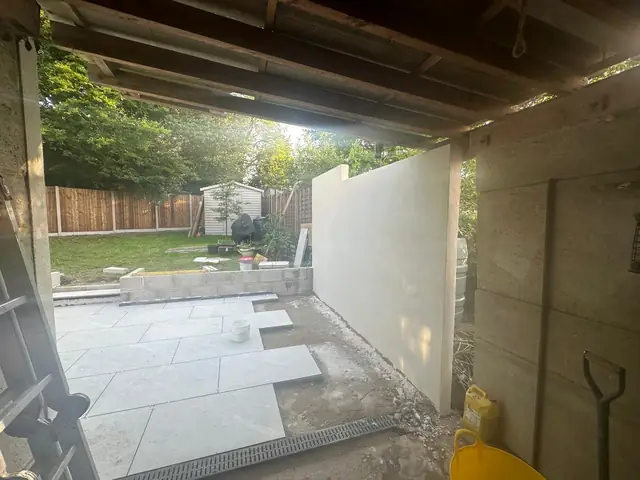
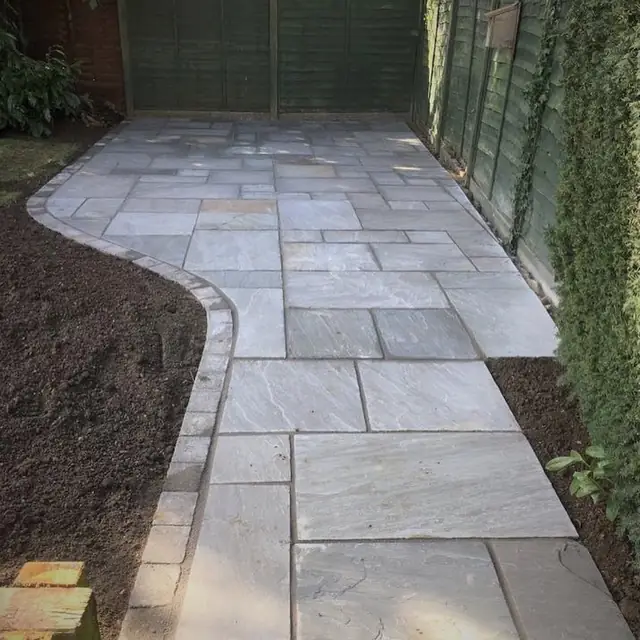
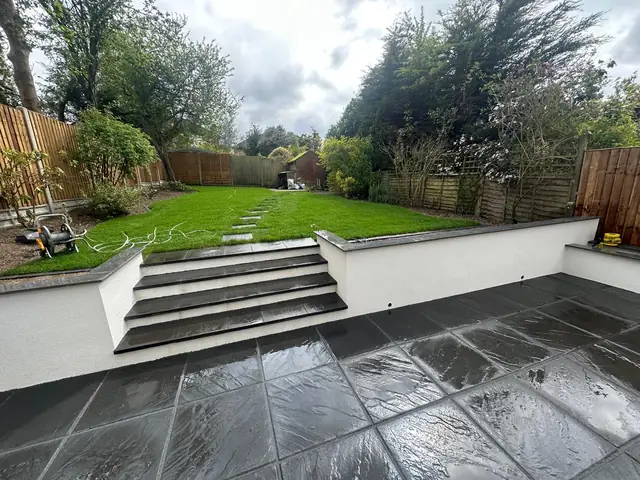
Paving in Hemel Hempstead splits by which part of the town you are in. On the flat estate plots the work is paths, edging and a terrace, and access is straightforward: side access and off-street space on most properties mean slabs come in and spoil goes out without going through the house. On the valley sides the town is built on, the ground falls enough that paving means steps and retained edges, and the job changes character entirely. Steps get set out with a level on site because every rise in a flight has to match, and a retained edge holding a level needs a footing and drainage behind it. Both are measured rather than estimated. Perry Niven quotes after walking the ground, and the quote states what comes out, what goes back and what it costs.
Paving in Hemel Hempstead
Paving in Hemel Hempstead is two different jobs depending on which side of the town you are on.
BMS Building lays paths, steps, edging and terraces here, from a base in Watford about twenty minutes away.
On the flat estates
Paths, edging and a terrace, with side access and off-street space on most properties, so slabs come in and spoil goes out without going through the house.
That keeps a straightforward run of paving genuinely straightforward, which is not true everywhere we work.
On the valley sides
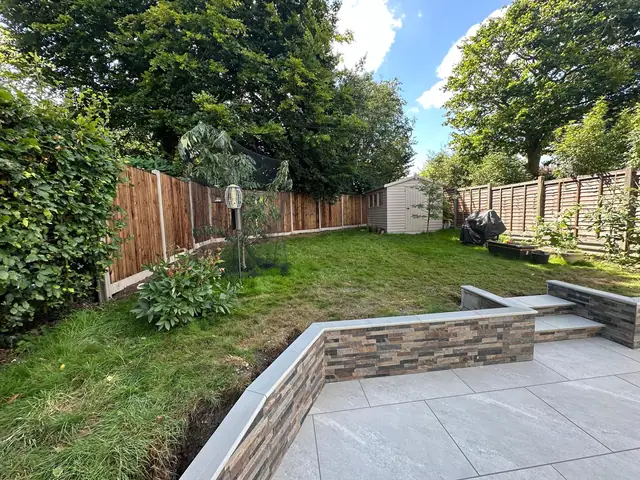
The town is built on the sides of the Gade and Bulbourne valleys, and on many plots the ground falls enough that paving stops being about surfaces and starts being about levels.
A level area on falling ground has to be cut in or built up and then held, with drainage behind whatever holds it. The steps between levels are the visible part and the part that has to be right: every rise in a flight should match, because the odd one out is the one people trip on.
They are set out on site with a level. Not estimated from a photograph, and not adjusted to fit once the slabs have arrived.
What is under the old path
Most of the town went up between the late 1940s and the 1970s and the gardens have usually been changed at least once since.
Buried slabs, old bases and redundant drainage runs turn up regularly. They change the dig depth and what the new sub-base has to bridge, which is why the depth is measured rather than promised in advance.
Full bed, and the falls
A full mortar bed under every slab, not five blobs. Falls away from the house, and on a sloping plot falls that send water somewhere it can actually go rather than to the bottom boundary.
The finished level stays clear below the damp proof course. Post-war housing generally gives better clearance than the Victorian stock further east, but it is still the constraint and it is checked before the levels are set.
Recent work near Hemel Hempstead
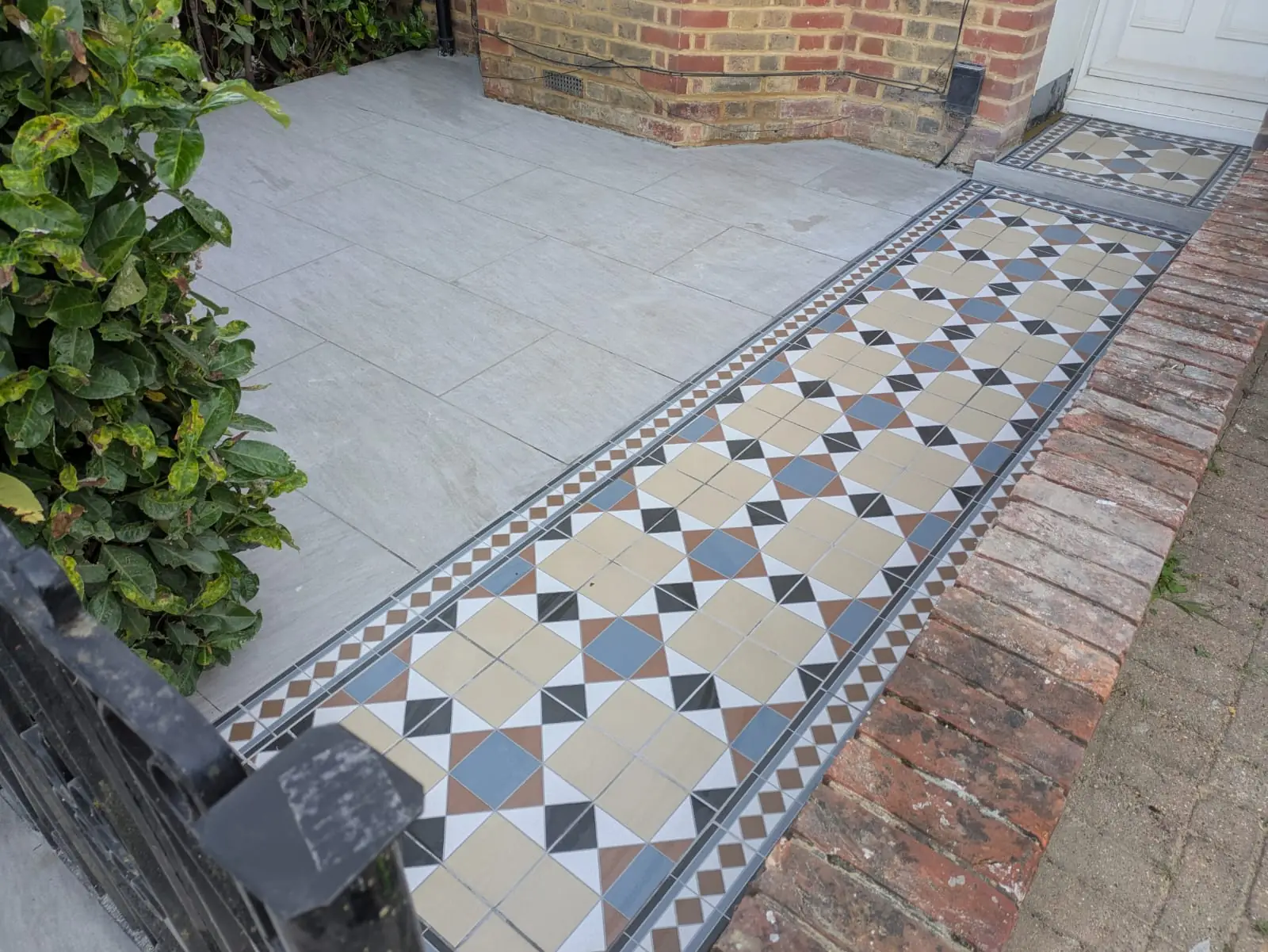
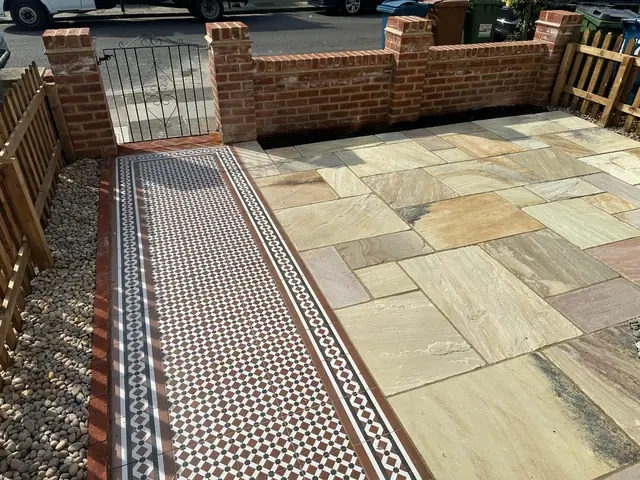
In Apsley, in Hemel Hempstead, BMS Building laid a Victorian geometric tiled path from the front gate to the door, with a patterned border and a tiled panel at the threshold, and light grey porcelain paving either side of it.
What Hemel Hempstead properties are like
What is under a Hemel paving job is less predictable than the tidy estate layout suggests. Most of the town was built between the late 1940s and the 1970s and the gardens have generally been altered at least once, so a path is frequently being laid over an old base, a buried slab or a redundant drainage run. That changes the excavation depth and what the sub-base has to bridge, and it is found by digging. The second local condition is the fall. On a sloping plot, surface water runs down the garden and arrives somewhere, so the falls on a path or terrace have to send it where it can go rather than to the bottom boundary or the back of the house. The third is the damp proof course: post-war housing generally has better DPC clearance than the Victorian stock in St Albans, but it is still the constraint on the finished level and it is checked before the levels are set rather than after.
Hemel Hempstead questions
My garden falls away. What does paving it involve?
- Usually steps and a retained edge rather than one sloping surface. A level area on falling ground has to be cut in or built up and then held, with drainage behind whatever holds it. The steps between levels are set out on site with a level so every rise matches, because an odd step is the one people trip on. It is more work than paving a flat garden and it is priced from the measurement rather than guessed.
What tends to be under an existing path here?
- Often old work. Most gardens in the town have been altered at least once since the house was built, so buried slabs, old bases and redundant drainage runs are common under a lawn or a path. They change the dig depth and what the new sub-base has to bridge, which is why the depth is not promised from a photograph.
Do you spot bed?
- No. Spot bedding is five blobs of mortar under each slab instead of a full bed, and it leaves most of the underside unsupported, which is why spot bedded paving rocks and cracks. A full mortar bed supports the whole slab. It is worth asking anyone else quoting whether they do the same.
We also cover Berkhamsted, Kings Langley, Boxmoor, Leverstock Green and Bovingdon from the same base.
Everything we do in Hemel Hempstead